From Jaguars to Llamas: 25 Animal Words That Build Real Spanish Sentences for Middle Schoolers
Your child doesn’t need more flashcards; they need words they can actually use.If your middle schooler already recognizes Spanish vocabulary but freezes when it’s time to speak, you’re not alone. This is one of the most common stages in language learning: they know words, but they don’t yet know how to connect them. The good news? With the right kind of vocabulary—especially topics kids...Read More
25 Spanish Words Kids Need to Talk About Apps, Tablets, and Digital Play, Without Sounding Like a Textbook
If your child already loves tablets, apps, or digital games, you already have a powerful Spanish-learning tool in your home. The key is not adding more screen time; it’s turning the screen time that already exists into meaningful, real-life Spanish conversations. For parents like Sofia, who already speak strong Spanish, the goal isn’t basic vocabulary like hola or gracias. The goal is to...Read More
Why So Many Latin American Desserts Are Served Warm (and Why Kids Love That)
Warm desserts aren’t an accident; they’re cultural. If you’ve ever watched your child cradle a bowl of arroz con leche or sip atole slowly, you already know this isn’t just about food. Something else is happening in that moment. Comfort settles in. Conversation stretches out. Language softens. For families raising children with Spanish as a lived language, warm desserts often feel familiar...Read More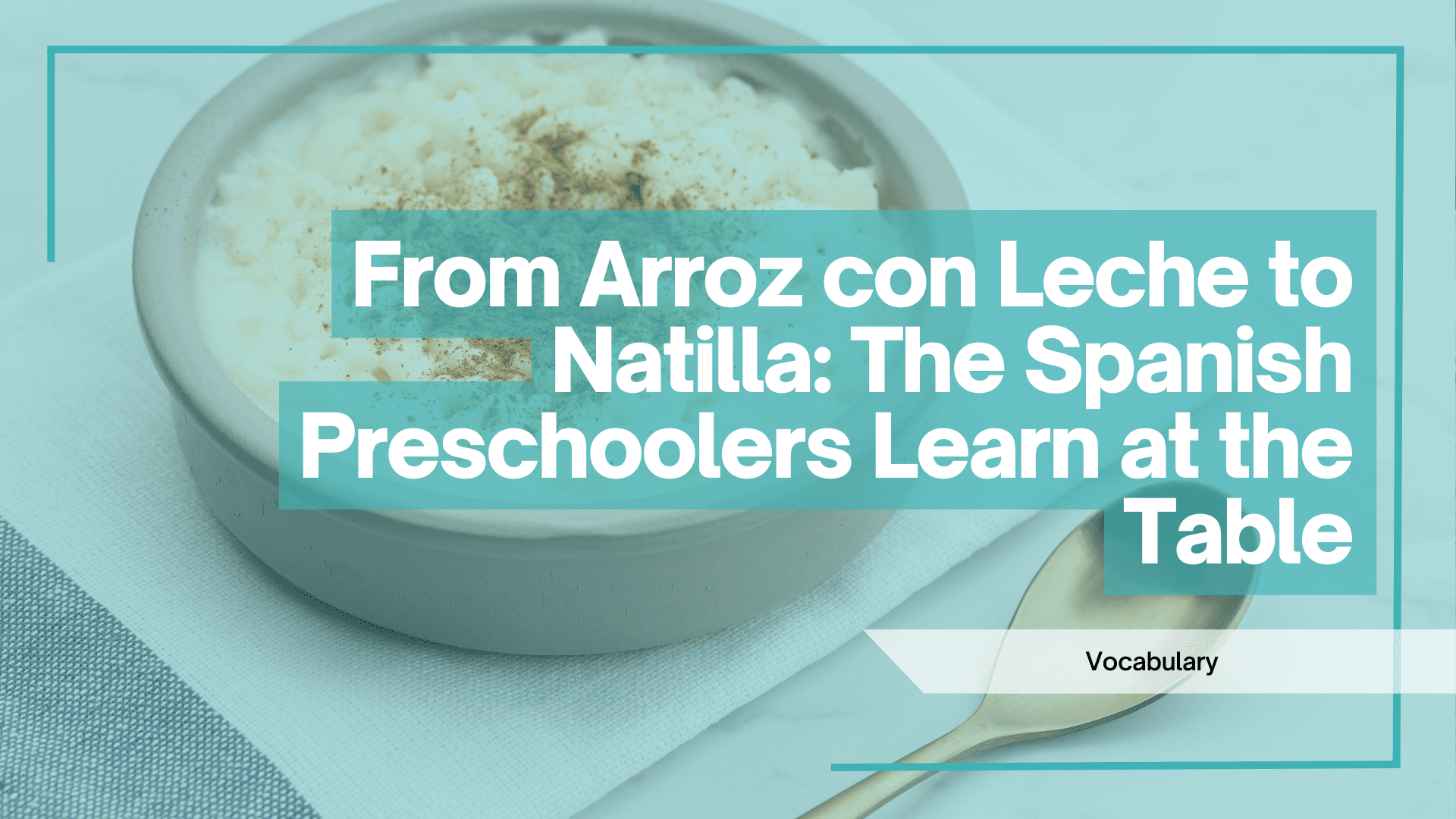
From Arroz con Leche to Natilla: The Spanish Preschoolers Learn at the Table
Some of the most advanced Spanish your child hears doesn’t happen in class—it happens at dessert. It happens when the spoon pauses mid-air, when someone asks for “un poquito más,” or when a preschooler tries to explain why natilla is thicker than arroz con leche. These moments may feel ordinary, but linguistically, they’re anything but simple. If you’re raising a child with strong Spanish...Read More
From Games to Grammar: How Educational Technology Can Teach Structure Without Boring Kids
If you’ve ever watched your child happily play a Spanish “learning game” and then realized they can’t actually use what they’ve learned, you’re not imagining things. As parents, we want learning to feel joyful, but we also want it to work. The good news is that it doesn’t have to be one or the other. With the right approach, educational technology can blend games and grammar in a way that...Read More
Why Spicy Food Is a Family Language in Latin America, And What Kids Learn From It
In many Latin American homes, the question isn’t if the food is spicy; it’s who can handle it.And if you’ve ever watched your child sit quietly at a family table while everyone else laughs, teases, and reaches for the salsa, you know that moment isn’t really about food. It’s about belonging. As a parent, I’ve come to see spicy food in Latin American families as something much bigger than...Read More
“Te Quiero” vs. “Te Amo”: The Valentine’s Mistake Advanced Learners Still Make
Fluent speakers still get this wrong, and it can change the meaning of an entire relationship. If your child already speaks Spanish comfortably, this might surprise you. After all, “te quiero” and “te amo” both translate to “I love you,” right? But in real Spanish-speaking families, choosing the wrong one can feel awkward, overly intense, or even emotionally confusing. And Valentine’s Day...Read More
The Spanish Your Child Never Learns in School—But Hears in Every Sports Interview
If you’ve ever heard your child form a perfectly correct sentence in Spanish—and then freeze when a native speaker responds—you’ve probably wondered why. They know the grammar. They know the vocabulary. So what’s missing? The answer usually isn’t more rules. It’s exposure to the Spanish people who actually use it every day. And nowhere is that more obvious than in sports...Read More
Snow Day Spanish: Fun Indoor Activities That Build Real Fluency
Turn a cozy winter afternoon into a Spanish-immersion experience, right from home. If you’ve ever found yourself staring at a snow-filled driveway, wondering how to keep your teen both entertained and learning, you’re not alone. Winter’s indoor days can feel long, but they’re also a golden opportunity to build real Spanish fluency in a relaxed, natural way. As a mom who wants language...Read More