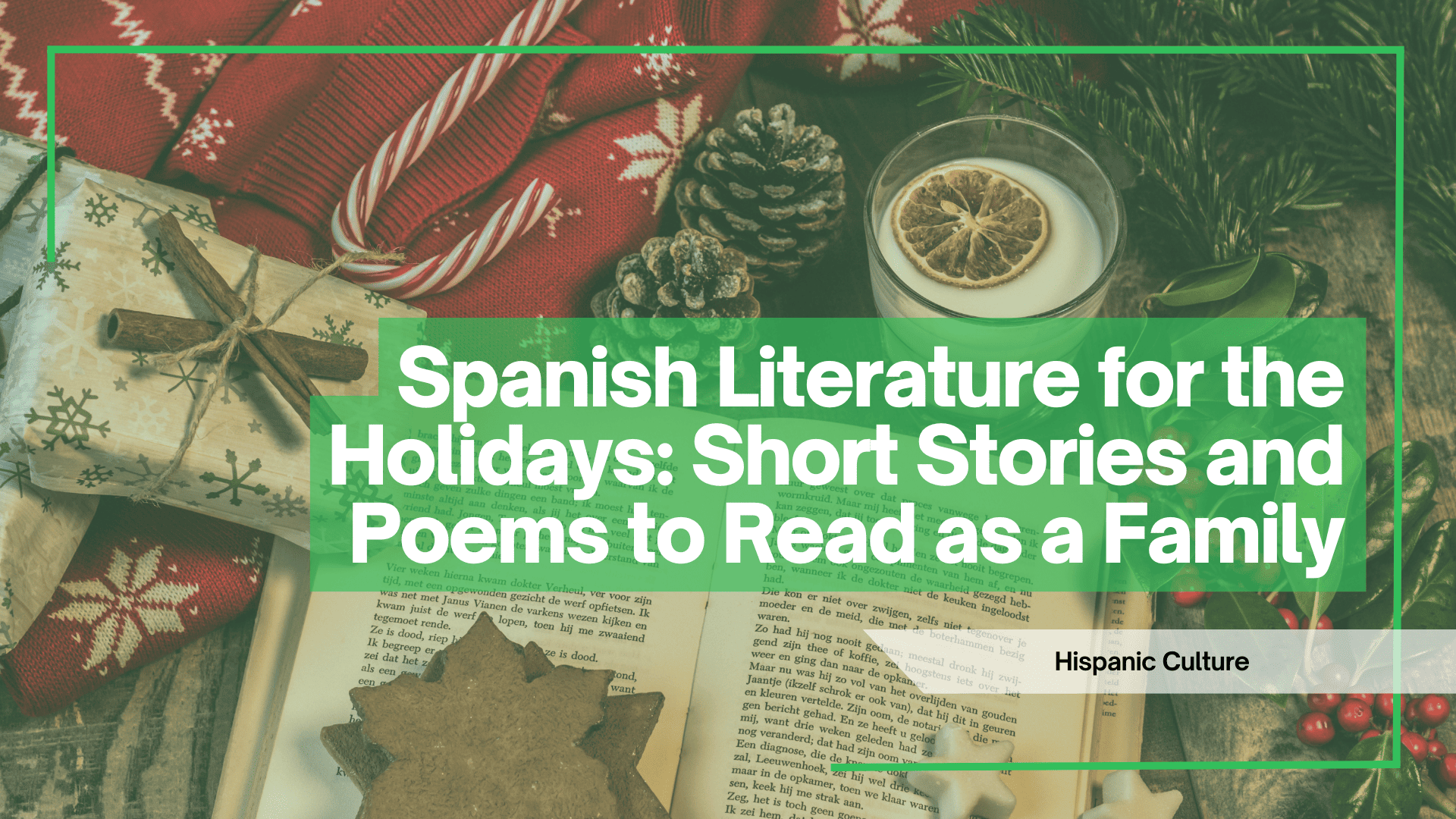
Spanish Literature for the Holidays: Short Stories and Poems to Read as a Family
As someone who learned Spanish through years of study, immersion, and a genuine love for language, I’ve discovered that nothing strengthens fluency like shared reading. And when the holidays roll around, literature becomes even more powerful. There’s something about sitting together with a warm drink, reading aloud, and exploring a story that makes Spanish feel alive in a way no worksheet ever could.
If you’re already fluent and your teen is working toward advanced confidence, holiday-themed Spanish literature is the perfect way to add depth and authenticity to their learning. It creates a bridge between culture, language, and family—a combination that research has shown to be incredibly effective. A study published in ScienceDirect recommends that bilingual families actively engage in reading together to reinforce language learning at home.
Today, I’d like to share some of my favorite short stories, poems, and excerpts that you can enjoy as a family this holiday season. These selections challenge advanced learners, spark meaningful conversations, and help your teen experience Spanish the way native speakers do: through literature.


Why Holiday Literature Is Perfect for Advanced Spanish Learners
Advanced high schoolers don’t need more repetition of “hola” or “¿cómo estás?”. What they need is texture—language that feels rich, emotional, and cultural. Holiday literature gives them that in a way that is both rigorous and accessible.
Reading during the holidays supports:
- Advanced vocabulary growth through imagery and descriptive language
- Cultural literacy, since many texts highlight regional traditions
- Emotional connection, which improves retention and engagement
- Natural fluency, because literature exposes learners to authentic phrasing
For parents who already speak Spanish, these readings also provide an opportunity to guide discussions, clarify nuances, and model pronunciation and interpretation.
Five Spanish Texts to Read This Holiday Season
These stories and poems are concise, powerful, and suitable for advanced teenagers. You can read them aloud, analyze them together, or simply enjoy them as a cozy part of your holiday routine.
1. “Los tres reyes magos” – Rubén Darío
This classic poem captures the mystery and magic of Epiphany with lyrical language and symbolism.
Why it works: Introduces advanced poetic vocabulary while highlighting a core holiday tradition in many Latin American countries.
2. “Navidad en las montañas” (excerpt) – Ignacio Manuel Altamirano
A beautifully written novella set in rural Mexico, perfect for pulling short passages or reading over a few evenings.
Why it works: Offers historical context and exposes learners to sophisticated 19th-century prose.
3. “Cuentos de Navidad y Año Nuevo” – Emilia Pardo Bazán
A collection of short stories set on Christmas Eve that blends tradition, family dynamics, and social commentary.
Why it works: Ideal for advanced learners ready to discuss characterization, irony, and narrative tone.
4. “Romance de Nochebuena” – Gabriela Mistral
A tender poem by Chile’s Nobel Prize–winning poet, infused with cultural and spiritual depth.
Why it works: Beautiful, concise, and perfect for reading aloud together.
If you need access to these and other texts, many are available through university literature archives such as the Biblioteca Miguel de Cervantes, a trusted resource for Spanish literary works.
How to Turn These Texts Into Meaningful Family Learning
Even advanced learners benefit from structure. Here are a few ways to make holiday reading both enjoyable and academically rich:
- Read aloud together and take turns interpreting difficult phrases.
- Ask your teen to summarize the text in Spanish, focusing on expressive vocabulary.
- Discuss the cultural references and compare them to your own family’s holiday traditions.
- Highlight three advanced phrases from each reading and challenge your teen to use them in conversation.
- Write a short holiday reflection inspired by one of the themes from the text.
These activities help your teen strengthen critical thinking skills, deepen cultural knowledge, and build the confidence needed for real-world fluency.
Literature Builds the Kind of Fluency That Lasts
As parents, especially those of us who already speak Spanish comfortably, we have a unique role in shaping how our teens experience the language. Literature isn’t just reading; it’s connection, reflection, and shared culture. And during the holidays, when everything slows down just a little, it becomes one of the most meaningful ways to learn together.
If your goal is for your teen to achieve mature, natural, culturally grounded fluency, holiday reading is one of the best gifts you can give them. It strengthens vocabulary, builds confidence, and creates family memories rooted in bilingualism.
So this season, carve out an evening or two. Light a candle, choose a story, and dive into the richness of Spanish literature as a family.
A free trial class is available with our experienced native Spanish-speaking instructors. Click here to know more!
Join one of the 40,000 classes that we teach each month and you can experience results like these

“It’s great being able to interact with native speaking people and having a conversation with them not just doing all the work on paper. It’s also an amazing opportunity to speak with native Spanish-speaking people without having to travel to a native Spanish-speaking country.”
– Melanie

“Getting to know wonderful teachers who care about me and my growth in language and education. Evelyn Gomez and Erick Cacao are two of the most extraordinary people I have ever met, and talking with them in Spanish at the beginning of classes is always so fulfilling and greatly contributes to my happiness, joy, and wellbeing.”
– Abby

“I love that my children have the opportunity to speak with a live person. They get to practice Spanish in a 1-1 setting while improve their speaking, writing and reading skills during their lessons. HSA is a great way to learn Spanish for all ages! My children are 6, 9 and 11. My oldest two (9 and 11) have been taking classes with HSA for almost 2 years now. They love seeing their teacher each week. They understand the importance of learning several languages. I’ve seen them grow and learn with HSA. I’m excited to see how they will improve the more classes they take. I highly recommend them. You can’t bet learning and speaking with a live teacher. I’ve tried other programs. It’s just not as motivating.”
– Karie Ann, Parent of 3
Check Out These other Hispanic Culture Resources!
- Why So Many Latin American Desserts Are Served Warm (and Why Kids Love That)
- From Arroz con Leche to Natilla: The Spanish Preschoolers Learn at the Table
- Why Some Latin American Desserts Are Less Sweet, and What That Teaches Kids About Taste
- Spicy Food Traditions Across Latin America (And How Families Talk About Them)
- Why Spicy Food Is a Family Language in Latin America, And What Kids Learn From It
- What Valentine’s Day Teaches Advanced Learners About Sounding Natural in Spanish
- Valentine’s Day Is One of the Best Times to Practice Advanced Spanish Conversation
- “Te Quiero” vs. “Te Amo”: The Valentine’s Mistake Advanced Learners Still Make

- 25 Spanish Words Kids Need to Talk About Apps, Tablets, and Digital Play, Without Sounding Like a Textbook - March 2, 2026
- How Do Sauces Like Ají and Salsa Verde Help Kids Learn Real-Life Spanish Faster? - March 1, 2026
- Object Pronouns Without Confusion: Where Do “Lo, La, Le, Se” Go in a Sentence? - February 28, 2026