
What Valentine’s Day Teaches Advanced Learners About Sounding Natural in Spanish
Real fluency shows up when emotions are involved. You can hear it immediately. When a Spanish conversation turns emotional—gratitude, affection, nostalgia—the language changes. Sentences get softer, pauses get longer, fillers appear, and the rhythm becomes more human. This is where advanced learners either shine… or suddenly sound less natural than they expected. If your child already...Read More
Valentine’s Day Is One of the Best Times to Practice Advanced Spanish Conversation
Romantic holidays create the kind of language that textbooks can’t teach. Every year, Valentine’s Day shows up with flowers, cards, and conversations that feel just a little more emotional than usual. And if your child already speaks Spanish at an advanced level, this holiday quietly becomes one of the best opportunities to practice real, meaningful Spanish conversation, the kind that...Read More
“Te Quiero” vs. “Te Amo”: The Valentine’s Mistake Advanced Learners Still Make
Fluent speakers still get this wrong, and it can change the meaning of an entire relationship. If your child already speaks Spanish comfortably, this might surprise you. After all, “te quiero” and “te amo” both translate to “I love you,” right? But in real Spanish-speaking families, choosing the wrong one can feel awkward, overly intense, or even emotionally confusing. And Valentine’s Day...Read More
How Spanish Borrowed Meaning from Indigenous Textile Cultures
Spanish didn’t replace Indigenous cultures; it absorbed them. That absorption didn’t just happen through food, place names, or traditions. It happened through meaning. And some of the most powerful meanings of Spanish absorbed came from Indigenous textile cultures that had been communicating identity, history, and hierarchy long before the Spanish ever arrived. I love this topic for...Read More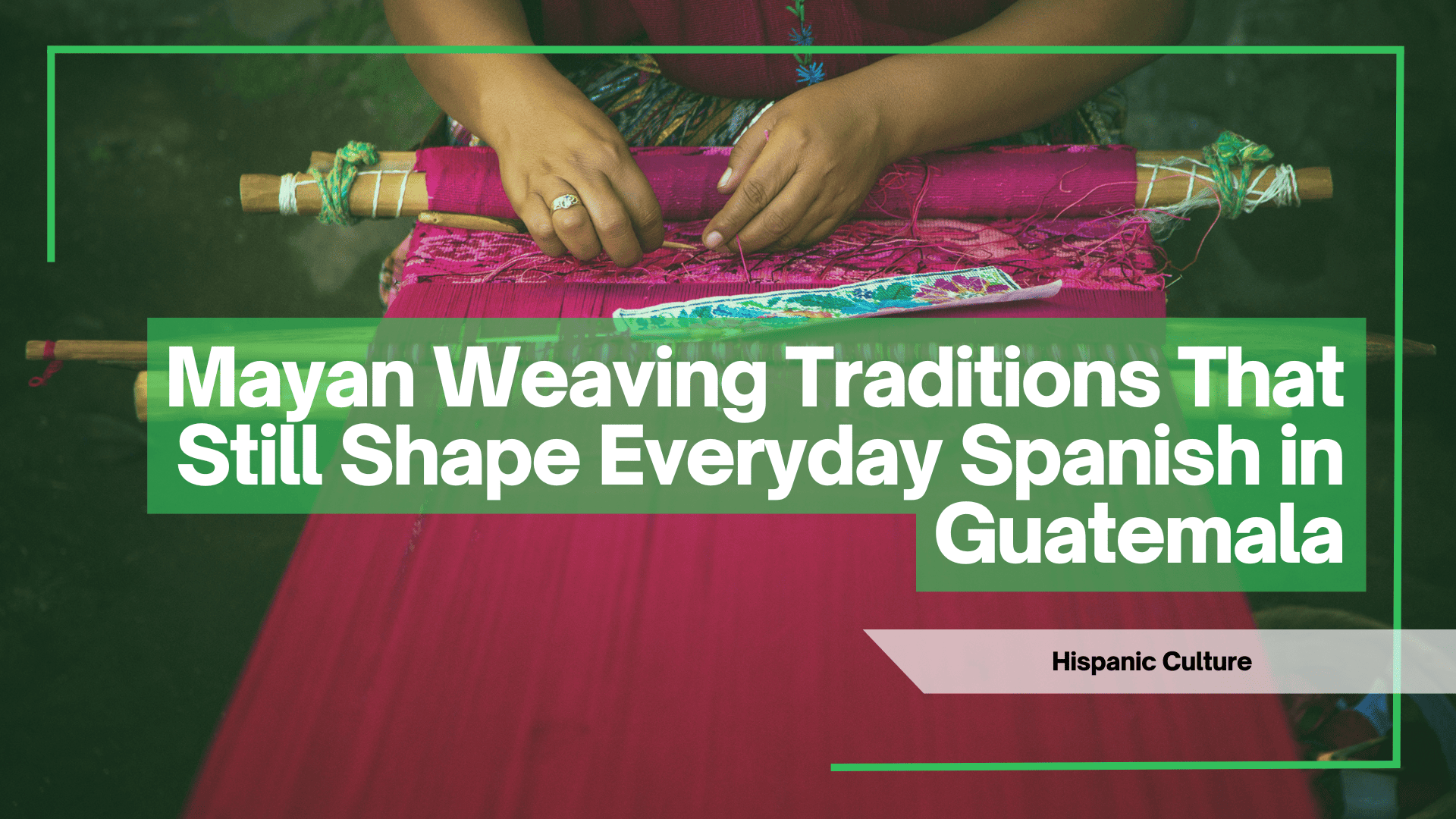
Mayan Weaving Traditions That Still Shape Everyday Spanish in Guatemala
Some of the most common Spanish words in Guatemala are woven directly into Mayan tradition. And once you realize that, Guatemalan Spanish stops feeling like just another regional variation and starts feeling like a living record of history, one you can hear, see, and even wear. This is one of the reasons I love talking about Mayan weaving traditions with adult Spanish learners. They remind...Read More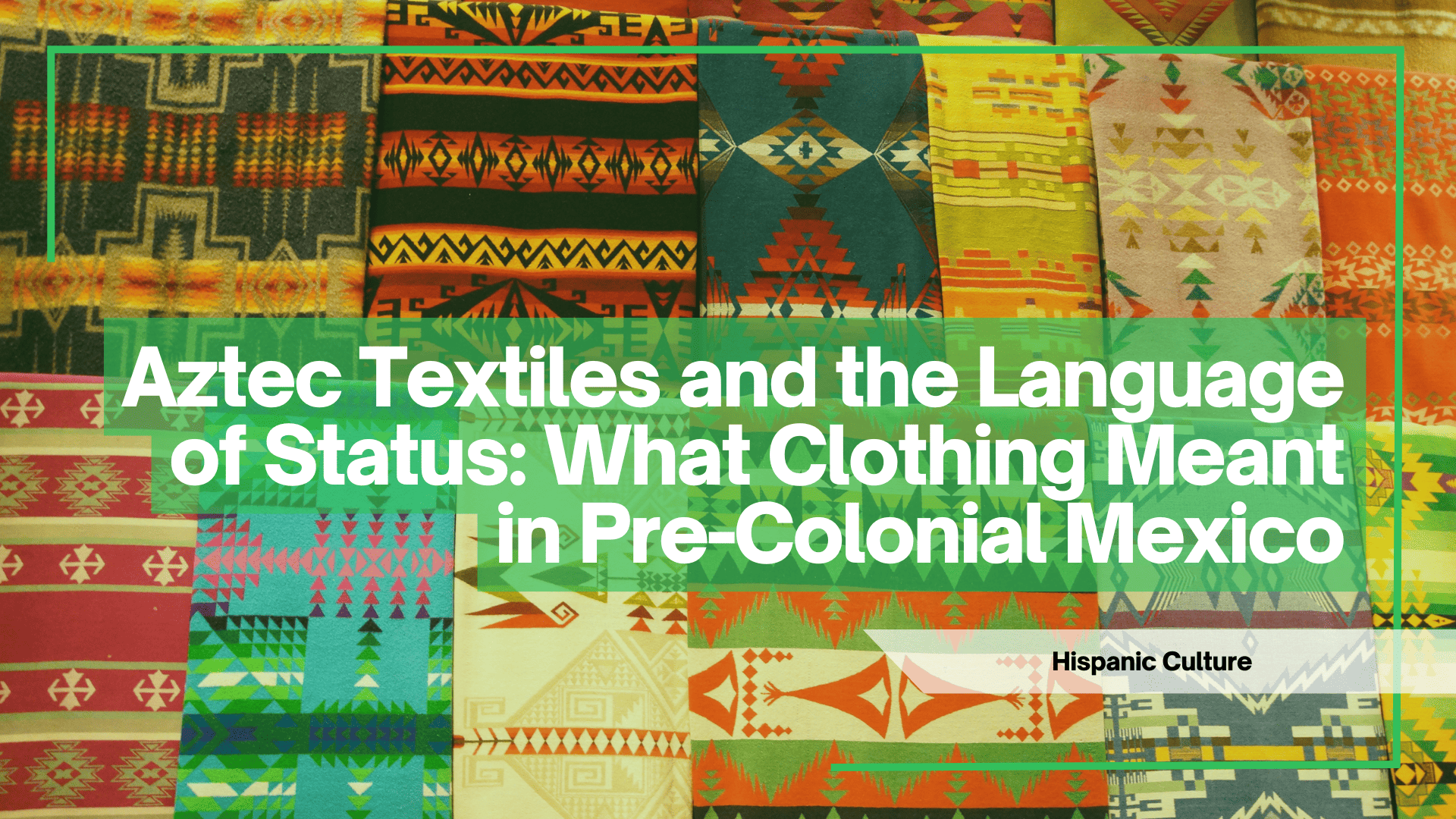
Aztec Textiles and the Language of Status: What Clothing Meant in Pre-Colonial Mexico
In the Aztec world, what you wore said more about you than what you said. Your clothing announced your social rank, your responsibilities, and even how much power you held, before you ever opened your mouth. Long before written Spanish arrived in Mexico, textiles already functioned as a precise, widely understood language of status. I love sharing this history with adult Spanish...Read More
From Threads to Identity: How Ancient Weavings Told Stories Before Written Spanish
Long before the Spanish arrived on the continent, Latin American cultures were already “writing” history, just not with words. They recorded identity, status, beliefs, and memory through threads, colors, and patterns. And once you start looking at ancient weavings this way, it becomes impossible to see language as something that lives only in grammar books. I’ve always loved this idea...Read More
Why Latin American New Year Traditions Focus on the Future and How That Helps Spanish Fluency
Across Latin America, New Year’s traditions are all about what comes next, and so is language learning. If you’ve ever watched a New Year’s celebration in a Spanish-speaking country, you’ll notice something right away: the focus isn’t just on closing the year, but on actively preparing for the future. For teens learning Spanish, that future-focused mindset proves to be one of the most...Read More
12 Grapes, 12 Wishes: A Spanish New Year Tradition That Builds Real Conversation Skills
What if a simple New Year’s tradition could help your teen speak Spanish more naturally? Not a worksheet. Not another vocabulary list. Just twelve grapes, a countdown, and a tradition that has helped Spanish speakers talk about hopes, goals, and the future for generations. If your high schooler knows Spanish words but freezes when it’s time to speak, this is exactly the kind of cultural...Read More