

Emergency Vocabulary: Your First Aid Kit in Spanish
If this is an emergency, call 911; if not, sit back, relax, and get ready to learn about first aid kits in Spanish. This will come in handy if you’re ever dealing with an accident in Latin America or Spain. Johnson and Johnson started selling the first commercial first aid kit back in 1888. Since then, these kits have helped countless people mend their wounds. It’s important to...Read More
What’s the Difference Between ‘Estar Por’ and ‘Estar Para’?
Estar por + infinitive and estar para + infinitive are both very common in Spanish. These verbal constructions are often confused but in this blog post, I set them apart. These expressions denote the intention and state of a person or the condition of a thing. Read ahead to find which is which, the negative forms and variants you need. Also, I include examples so you can practice these...Read More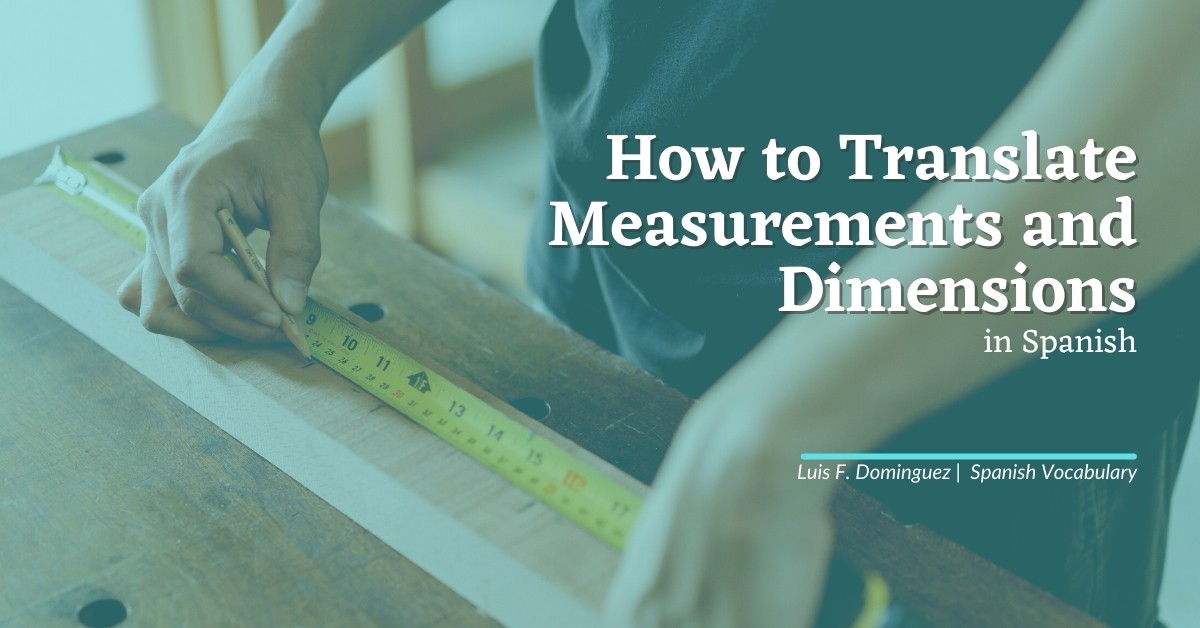
How to Translate Measurements and Dimensions in Spanish
Have you ever wondered about how Spanish speakers talk about measurements and dimensions in Spanish? The fact that in the Spanish-speaking world they use the metric system affects the way people talk about these topics. But there is much more than the metric system when talking about this interesting subject. Keep reading to find out what the difference is between the...Read More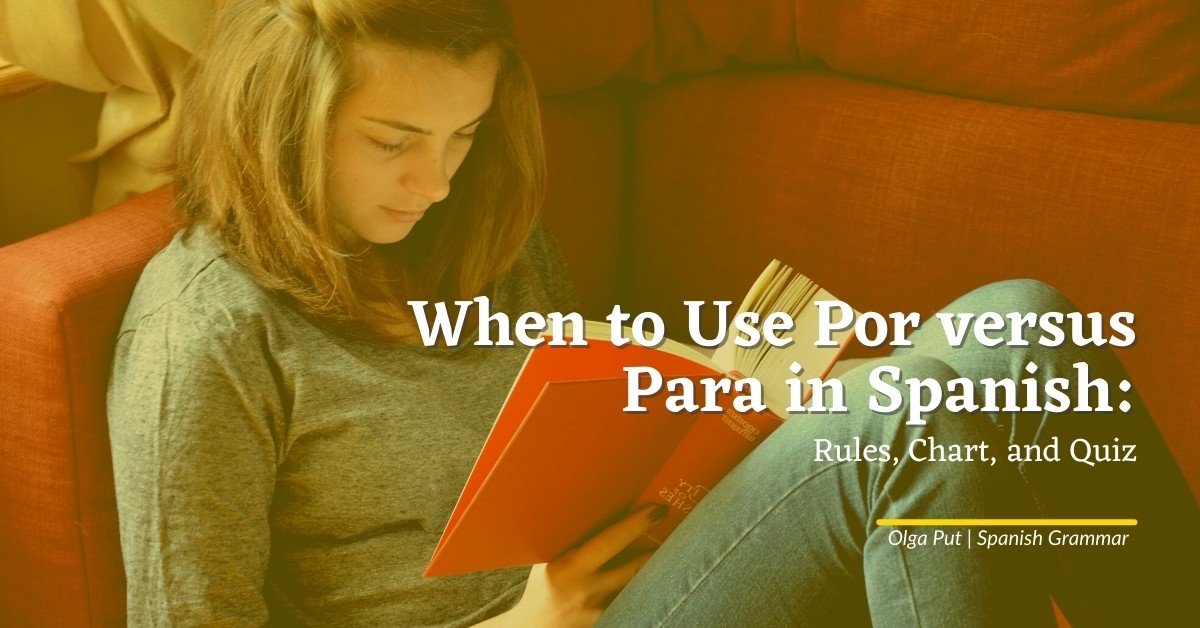
When to Use Por versus Para in Spanish: Rules, Chart, and Quiz
When do you use para or por in Spanish? Let’s be honest. You’ve asked this question at least once in your Spanish-learner’s life! Por and para are Spanish prepositions that are tricky to grasp quickly because they don’t exactly match with English equivalents. In this blog post, I clarify the major differences between por and para, how to translate them, as well as some specific rules of...Read More
Ir Conjugation: Free Spanish Lesson, Quiz, and PDF
We’re going to learn—or vamos a aprender—about the conjugation of the verb ir in Spanish! Ir is one of the most used verbs in Spanish, so get ready to level up your language understanding. Ir is an irregular and stem-changing verb that means “to go.” It is part of the –ir verbs in Spanish such as decir, seguir, venir and salir. Just as in English it does not always mean...Read More
Master the Difference Between Donde and Adonde
Donde and adonde look similar, don’t they? But don’t get confused, they are two words with different meanings. However, it’s an easy topic in Spanish grammar and I guarantee that you will know the difference between them before you’re finished with this blog post! Read on to learn the similarities and differences between these two words, as well as in which situations to use them. At...Read More
When to Use De vs Desde and What’s the Difference in Meaning?
Desde and de in Spanish are two prepositions that cause a bit of confusion because they both mean “from.” When it comes to choosing between those two, knowing different usages and meanings will give you the tools to make the right choice. Today we unravel the difference between de vs desde with definitions, guides for usage, and clever tricks for using them...Read More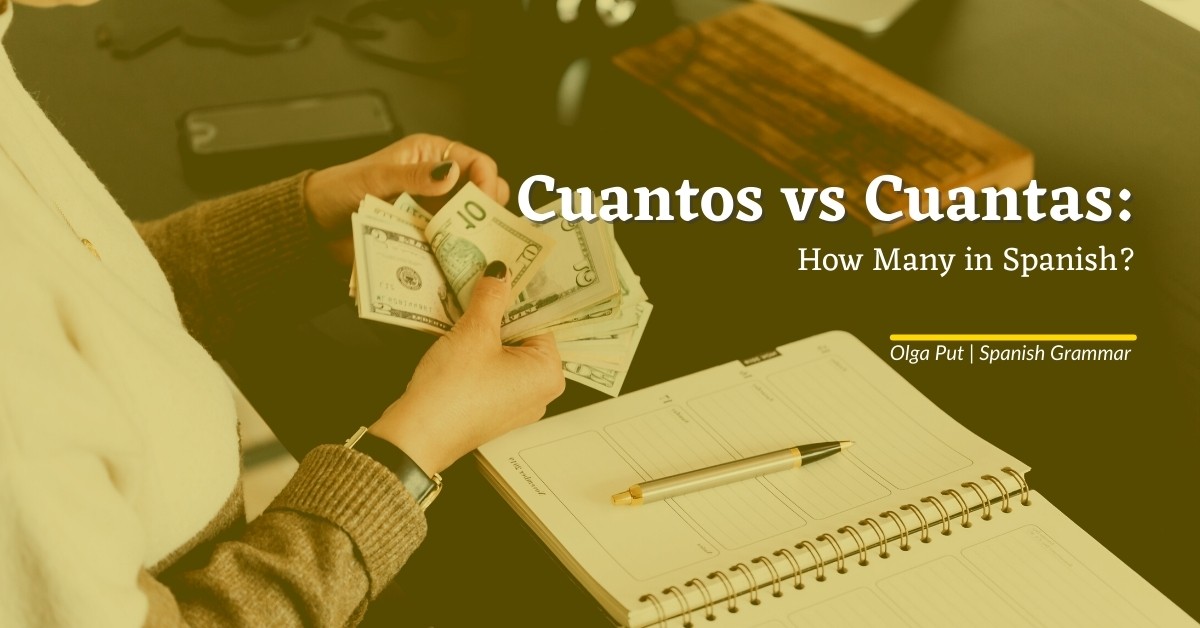
Cuantos vs Cuantas: How Many in Spanish?
Ready to learn all about cuantos in Spanish? Have you been searching the internet with terms like “cuantas translation,” “cuantas meaning,” or “cuantos definition”? No, I didn’t get access to all your cookies, I just know what students at your level want and need to learn in relation to this topic! In this blog post, learn how to say “how much” and “how many” in Spanish....Read More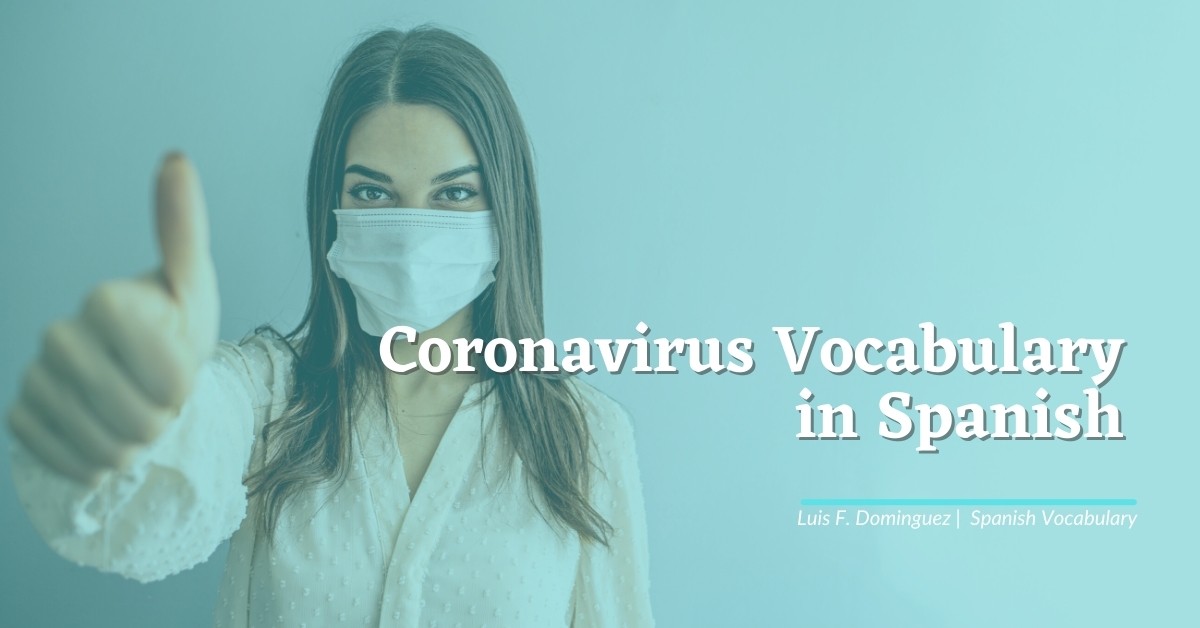
Coronavirus Vocabulary in Spanish
Are you traveling to a Spanish-speaking country and you feel the need to learn some coronavirus vocabulary in Spanish? If so, this is the right post for you as today I’m discussing how to talk about the covid-19 pandemic in Spanish-speaking countries and providing you with the ultimate coronavirus vocabulary in Spanish. You’re also learning coronavirus-related nouns and verbs,...Read More