Ser vs. Estar at the Museum: Which One Do We Use to Describe Art?
Ser vs. Estar at the Museum: Which One Do We Use to Describe Art?
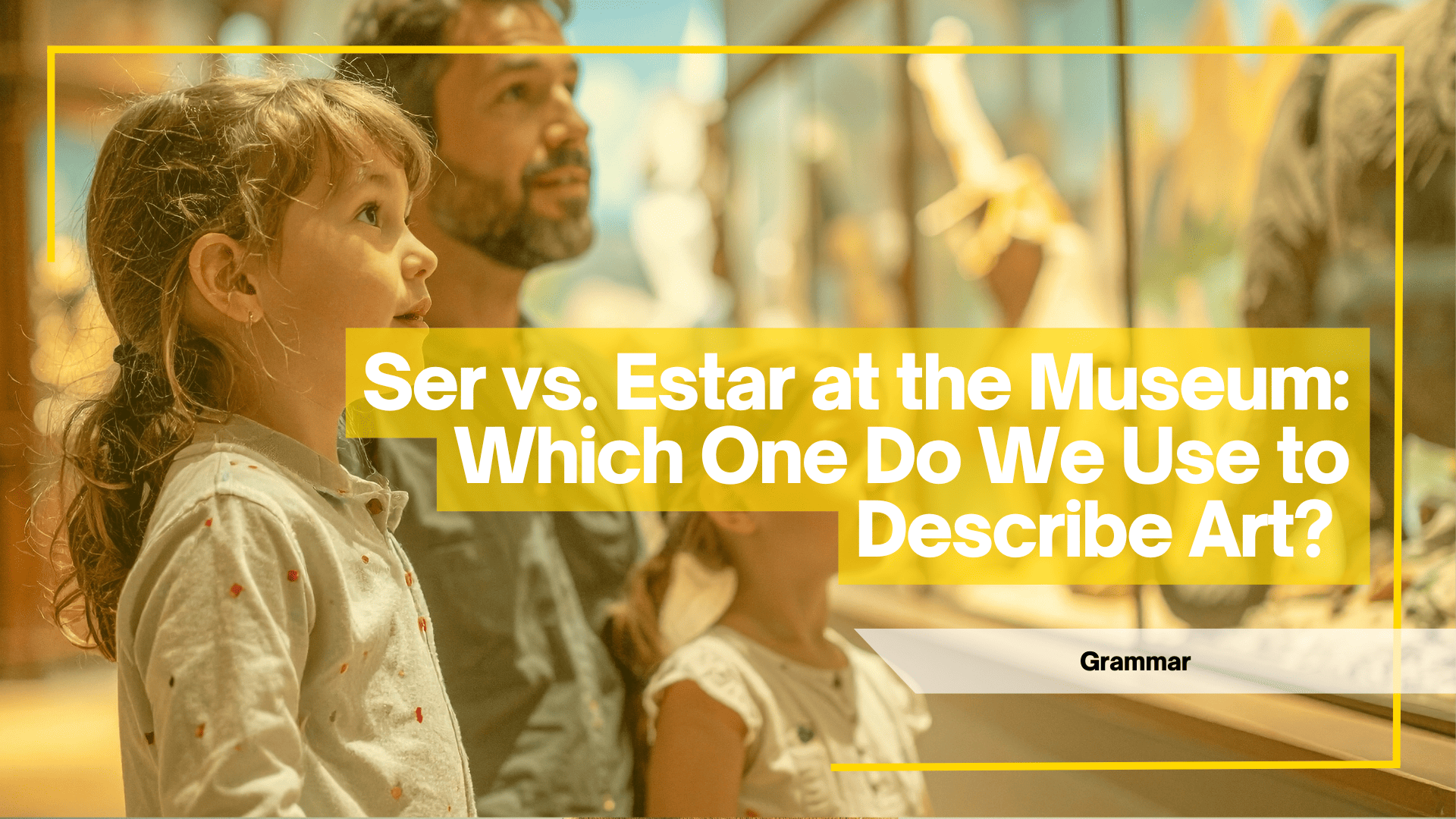
Imagine you’re standing in front of a colorful mural with your middle schooler during Hispanic Heritage Month. The teacher asks, “Describe this in Spanish!” Your child bravely starts: “El mural… es… está…?” Then they freeze. Which verb is correct?
This moment is a common hurdle for new Spanish learners. The verbs ser and estar both mean “to be,” but they aren’t interchangeable. For beginners, that can feel confusing and frustrating. The good news? With a simple three-step chooser and some ready-made examples, your child can go from guessing to confidently describing what they see.
Let’s walk through ser vs. estar in a fun, museum-inspired way that helps art, culture, and grammar all click together.


What’s the Difference Between Ser and Estar?
Think of ser as the defining brushstrokes of a painting. It tells us what something is at its core: its identity, style, or origin.
Now think of estar as the spotlight on the gallery wall. It shows us where something is or how it looks right now, whether in position, condition, or mood.
One way to remember it:
- Ser = permanent or defining features
- Estar = temporary states or locations
The 3-Step Chooser (Quick Win!)
Here’s the quick decision tool your child can use anytime they’re stuck:
- Identity or Essence? → Use SER
- What kind of art is it?
- Who made it?
- What style or material defines it?
- Location or Position? → Use ESTAR
- Where is the artwork in the room?
- How is a figure positioned in the painting?
- Condition, Mood, or Appearance Right Now? → Use ESTAR
- Does the gallery look full?
- Is the piece damaged?
- How do the students feel about it?
Pro Tip: The one curveball—events! Even though “location” usually uses estar, events take ser. (La exposición es en el Museo Nacional.)
Rules and Structures
Here’s a simple breakdown:
Use SER for:
- Classification/Style – El estilo es abstracto.
- Material – La escultura es de madera.
- Origin/Author – La obra es de Diego Rivera.
- Time/Date – La exposición es mañana.
- Event Locations – La charla es en la sala 3.
Use ESTAR for:
- Location/Position – El cuadro está a la derecha.
- Temporary Condition – Los colores están brillantes con la luz.
- Emotions/Reactions – Los niños están emocionados.
- States (open/closed/full) – La galería está abierta.
- Actions in Progress (estar + -ing) – El artista está pintando en vivo.
Examples in Context
- El mural es colorido y abstracto. (Defines style)
- La cerámica es de Talavera. (Material/origin)
- La estatua está en el centro de la sala. (Position)
- El museo está lleno de estudiantes hoy. (Condition)
- Los visitantes están impresionados con la exposición. (Emotion)
Exceptions & Edge Cases
- Events take ser: La fiesta es en el museo. (Even though the museum is a place, it’s the event we’re describing.)
- Adjectives that change meaning:
- La charla es aburrida = the talk is boring (by nature).
- El guía está aburrido = the guide is bored (at this moment).
Common Mistakes and How to Avoid Them
- Mixing up location rules
- Wrong: El museo es en el centro.
- Correct: El museo está en el centro.
- Using ser for emotions
- Wrong: Yo soy feliz ahora.
- Correct: Yo estoy feliz ahora.
- Forgetting article gender when describing
- La pintura es bonita vs. El mural es bonito.
Encourage your child to pause and use the chooser instead of rushing—they’ll avoid most mix-ups this way.
20 Plug-and-Play Art Captions
With SER
- Este mural es colorido.
- El estilo es abstracto.
- La composición es simétrica.
- La cerámica es de Talavera.
- El tema es la naturaleza.
- El patrón es de rayas.
- El bordado es detallado.
- La obra es de Frida Kahlo.
- La pieza es de 1940.
- La exposición es en el Museo Nacional.
With ESTAR
- El cuadro está a la derecha.
- La figura está en el centro.
- La sala está llena.
- La galería está abierta.
- El lienzo está dañado.
- Los colores están vivos con esta luz.
- Los niños están emocionados.
- Las piezas están juntas en esta vitrina.
- La puerta está cerrada.
- El artista está pintando en vivo.
Mini Practice
Fill in the blanks with ser or estar (correct form):
- La pintura ___ muy antigua.
- El museo ___ en el centro de la ciudad.
- Los estudiantes ___ emocionados.
- La charla ___ en la sala 2.
- La escultura ___ de mármol.
Answer Key
- es
- está
- están
- es
- es
Confidence at the Museum
When your child learns the difference between ser and estar, they stop guessing and start expressing. Instead of freezing in front of an artwork, they’ll know exactly what to say and feel proud doing it.
This simple museum connection is just one example of how Spanish can come alive through culture and real-life context. Imagine your child confidently pointing out colors, shapes, and feelings in Spanish on your next outing.
Ready to keep building that confidence? Try a free class with Homeschool Spanish Academy and see how fun, interactive lessons can turn tricky grammar into easy wins.
Join one of the 40,000 classes that we teach each month and you can experience results like these

“It’s great being able to interact with native speaking people and having a conversation with them not just doing all the work on paper. It’s also an amazing opportunity to speak with native Spanish-speaking people without having to travel to a native Spanish-speaking country.”
– Melanie

“Getting to know wonderful teachers who care about me and my growth in language and education. Evelyn Gomez and Erick Cacao are two of the most extraordinary people I have ever met, and talking with them in Spanish at the beginning of classes is always so fulfilling and greatly contributes to my happiness, joy, and wellbeing.”
– Abby

“I love that my children have the opportunity to speak with a live person. They get to practice Spanish in a 1-1 setting while improve their speaking, writing and reading skills during their lessons. HSA is a great way to learn Spanish for all ages! My children are 6, 9 and 11. My oldest two (9 and 11) have been taking classes with HSA for almost 2 years now. They love seeing their teacher each week. They understand the importance of learning several languages. I’ve seen them grow and learn with HSA. I’m excited to see how they will improve the more classes they take. I highly recommend them. You can’t bet learning and speaking with a live teacher. I’ve tried other programs. It’s just not as motivating.”
– Karie Ann, Parent of 3
Want more free Grammar Resources? Check these out!
- Object Pronouns Without Confusion: Where Do “Lo, La, Le, Se” Go in a Sentence?
- The Hidden Grammar Rule: When Spanish Uses Double Negatives (And Why That’s GOOD)
- Spanish Question Words Kids Use Every Day
- Spanish Word Order for Simple Sentences (Kids Included)
- Making Spanish Verbs Negative Made Simple: A Parent Guide
- Spanish Adjective Agreement Rules for Kids
- How New Year’s Resolutions Sound in Spanish (and Why Teens Should Learn Them Early)
- Sound More Fluent: Essential Spanish Linking Words for Kids

- From Netflix to Fluency: How Spanish Shows Can Support College-Ready Language Skills - March 30, 2026
- 5 Spanish-Language Shows High School Beginners Can Actually Follow (Even From Day One) - March 29, 2026
- From ‘El Perro’ to Full Conversations: Teaching Kids to Describe Animals in Spanish Naturally - March 28, 2026