28 Spanish Suffixes To Boost Your Fluency to Super-Human Status
Spanish suffixes are a great way of increasing your vocabulary without learning new words. If you learn these little Spanish word endings, called suffixes, you’ll be able to create hundreds of new words. (Exciting, right?) And with this giant list and lesson by your side, you’ll be ready to start expressing yourself in Spanish better than you ever have. In this guide, you’ll...Read More
Comparatives and Superlatives in Spanish
Are comparatives and superlatives in Spanish really that useful? Let’s see: Can you speak more slowly? I like that one more. You’re the best! It’s the most difficult word to pronounce! They’re more useful than you may have realized! Superlatives and comparatives in Spanish are everywhere, and learning them is definitely worth your time. Table of Contents:...Read More
How to Use Vosotros When You Talk to Spanish Speakers in Spain
Vosotros in Spanish is rarely used in Latin America, but if you’re planning to visit Spain and want to blend in, it’s essential for you to master vosotros and know how it works. Using vosotros instead of ustedes is one of the slight differences that distinguish Latin American Spanish from European Spanish. It is possible to learn when to use it by recognizing key variations from one...Read More
Ir + a + Infinitive: The Near Future Tense in Spanish
Ir + a + infinitive is a simple Spanish formula for expressing the near future. In fact, a similar formula exists in English, where we swap ir for “going”: What are you going to do today? Who are you going to see? Where are you going to go this weekend for fun? Discussing your plans and intentions for the future are an important part of daily conversations and in Spanish,...Read More
Estar Conjugation: Free Spanish Lesson, Exercises, and PDF
Estar is one of the most common verbs in the Spanish language. It’s one of the translations of the verb “to be” in English, so it’s actually really important to understand how the estar conjugation works in Spanish. If you have been studying Spanish for a while, you know that conjugations in this language can be quite a challenge. With three moods, six subjects, irregular verbs, and...Read More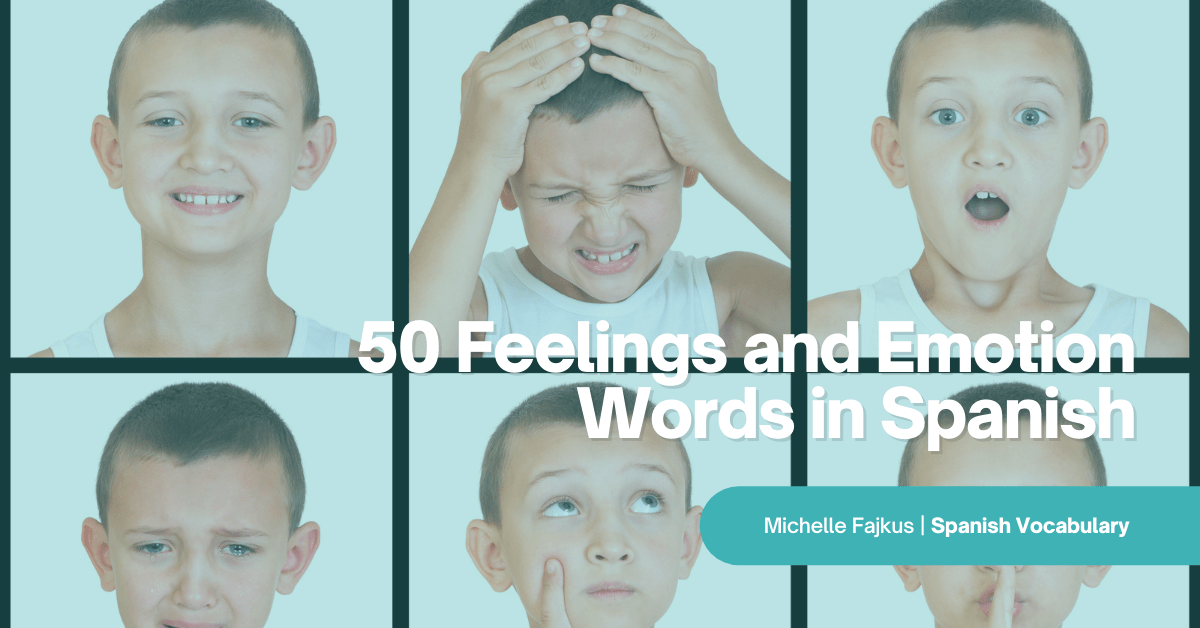
50 Feelings and Emotions in Spanish: Expressions, Vocab, and Grammar
Enjoy this guide to expressing your feelings and emotions in Spanish! Many of us think that “feelings” (los sentimientos) and “emotions” (las emociones) are the same, but they are actually different. Emotional experiences and physical sensations—like hunger, sadness, or surprise—cause feelings. Feelings are conscious experiences, while emotions can be either conscious or subconscious....Read More
100 Sentences With the Spanish Verb Ser
As you begin your learning journey, the verb ser in Spanish is key to expressing ourselves. It’s fundamental to basic Spanish grammar. Read this blog post, to learn what the verb ser means in Spanish and how to use it. Access tons of examples so that you can master its use! Ready? Let’s begin! What Does the Verb Ser Mean? The verb ser in Spanish means “to be” in English....Read More
An Epic Grammar Guide to ‘Lo’ in Spanish: ¡Sí, Lo Puedes Aprender!
Who knew such a tiny word could cause such big confusions? Lo is a wacky word—and the moment you want to translate it from Spanish into English, it starts to get rough. What does lo mean? Here are some examples of its versatility in meaning: Lo quiero. (it)I want it. Lo vi. (him)I saw him. Lo difícil es comenzar. (the)The hard part is getting started. Lo siento. (no...Read More
10 Mistakes You’ll Hear Native Spanish Speakers Make in Spanish
Have you ever heard a Spanish native speaker say something that you thought was incorrect? You then ran to check if you had learned something wrong, but no. You, the Spanish learner, were right, and the native speaker was wrong! Stop the presses! Yeah, it happens in every language. In English, you’ll also hear people saying things like *”He don’t like...Read More