
Math Time! How to Express Spanish Fractions
Do you want to know how to express Spanish fractions? You are in the right place! This lesson will be a milestone in your Spanish learning journey. Going through it, you will understand the differences and similarities of fractions between English and Spanish languages, along with their number and gender specifications. To simplify, this practical guide will cover these different...Read More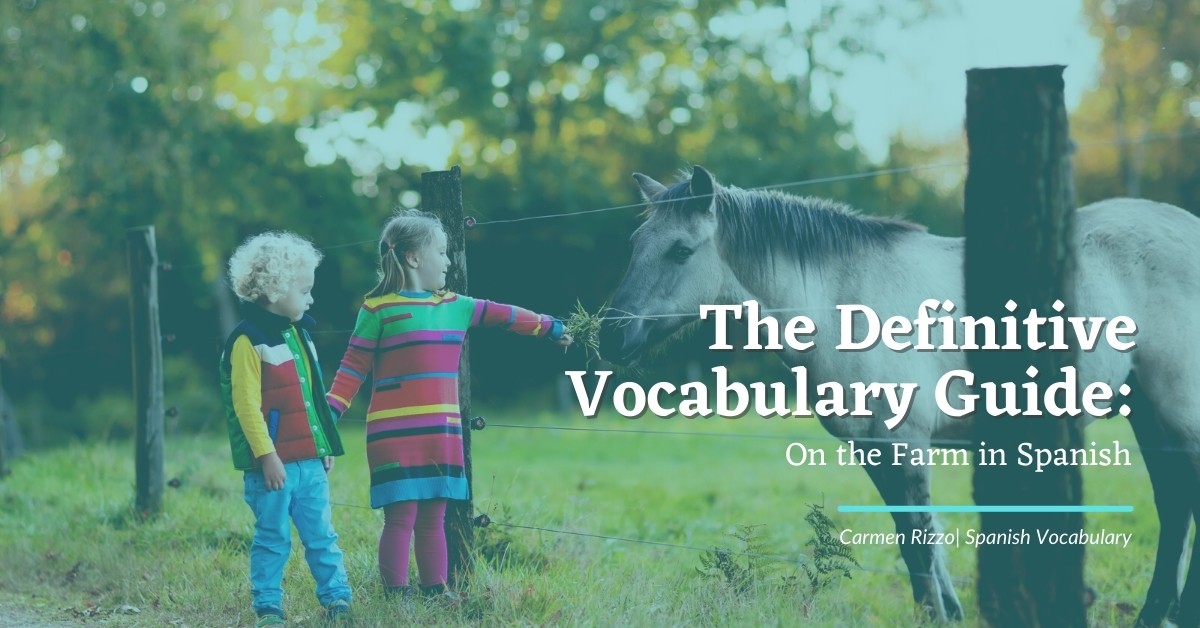
The Definitive Vocabulary Guide: On the Farm in Spanish
La granja, or farm in Spanish, is one of the first topics that Spanish students (both native speakers and second language learners!) learn about. It’s a fun and easy way to practice useful Spanish vocabulary! The farm is the perfect topic to learn new vocabulary, because you can learn about a variety of topics, like animals, plants, vegetables, fruits, and even machines! ...Read More
Olvidar vs Olvidarse: What’s the Difference in Meaning?
Olvidar vs olvidarse are two different Spanish verbs used to say that you don’t remember something. Both can be translated as versions of the English verb “to forget.” However, they’re not the same and shouldn’t be used in the same contexts. Today’s post is an opportunity to introduce or reinforce grammar knowledge. The root of the olvidar vs olvidarse debate lies in the existence of...Read More
When to Use ‘Más Que’ and ‘Más De’ in Spanish
Although más que and más de sound alike, their meanings are completely different. Más in Spanish is a word that can be used as an adjective or an adverb to compare two or more objects, subjects, or situations. On the other hand, que—without an accent mark—is a relative pronoun used to introduce a clause. And finally, de is a preposition that indicates (in the context of this...Read More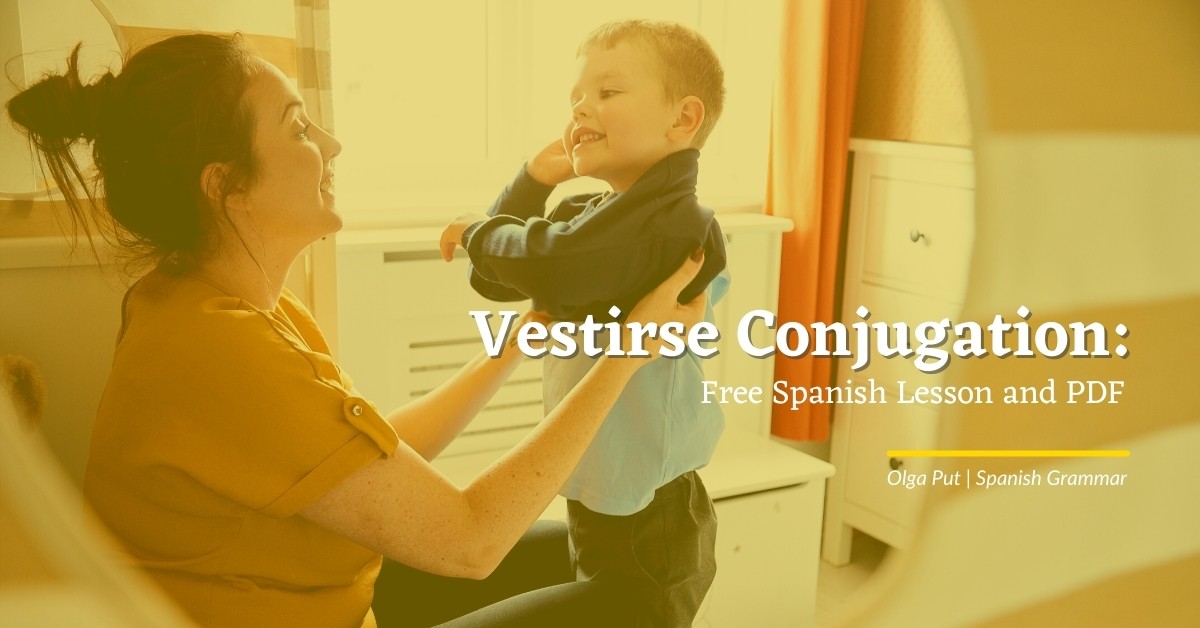
Vestirse Conjugation: Free Spanish Lesson and PDF
We all get dressed every day and it’s fun to talk about fashion—time to learn vestirse conjugation! Vestirse means “to get dressed,” “to put your clothes on,” and sometimes even “to dress up in a costume.” It’s a common verb and it conjugates like another Spanish verb, pedir (to ask). It has some irregularities in some tenses but I will talk about them later in more detail....Read More
9 Types of Subordinating Conjunctions in Spanish That Will Supercharge Your Fluency
If you consider your Spanish level to be intermediate or higher, you must add subordinating conjunctions to your linguistic skills. Subordinating conjunctions let us construct more complex phrases and are an indicator of fluency. I’m here to help remind you what conjunctions are and what types you find in Spanish. Then, we’ll jump directly into the subordinating conjunctions...Read More
A Quick Grammar Guide to Present Perfect Irregulars in Spanish
Have you come across present perfect irregulars in your Spanish classes? Do you know which verbs have present perfect irregulars? Do you know the rules for this group of irregular verb forms? If you want to know the answers, read on. I’ll reveal all the secrets about present perfect irregulars and tell you how to distinguish them from adjectives. You’ll also have an opportunity to...Read More
Porque vs Por Qué vs Por Que: Which to Use and Why
What’s the deal with porque vs por que vs porqué vs por qué? Is there any difference? Pronunciation no, emphasis yes. Does it matter if I omit the accent marks? Oh, yes. Let me explain. Have you ever made a mistake with it’s or its, or their, they’re, and there? We all do, in situations when our mind simply goes blank. However, if you give a second reading to your text, you’ll correct your...Read More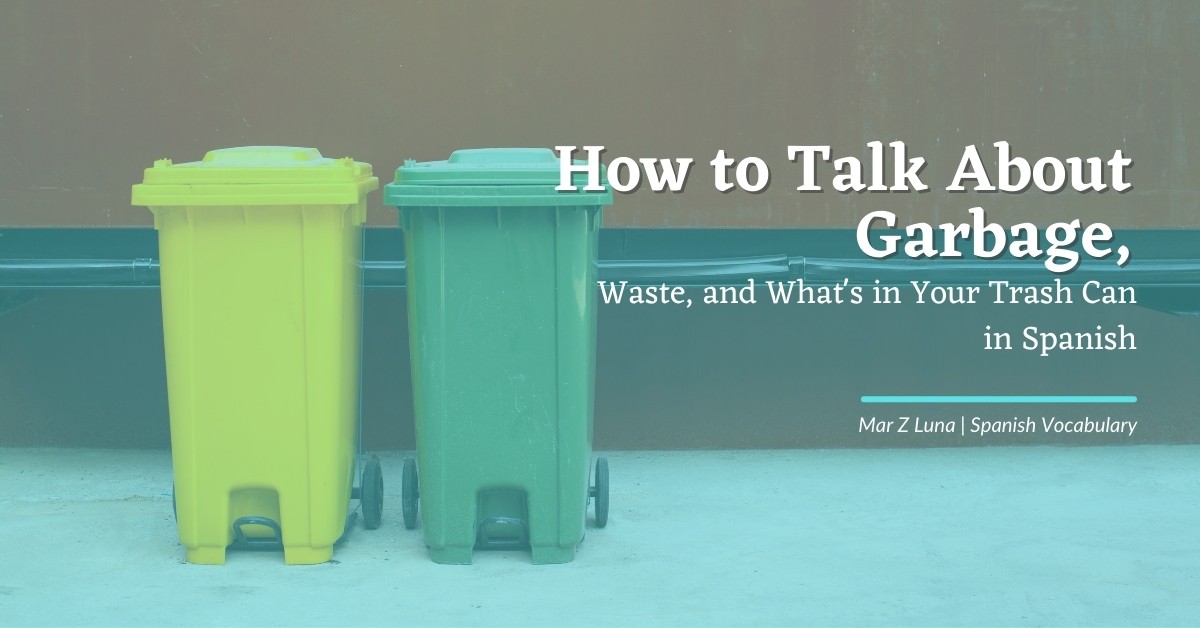
How to Talk About Garbage, Waste, and What’s in Your Trash Can in Spanish
Do you know how to discuss what’s in your trash can in Spanish? What about the word “trash can” itself? Believe it or not, there are more ways than one to say this word! El bote de basura might be one of the most common terms you’ll find in most Latin American countries. Others are la basura, la papelera, el cubo de basura and el zafacón. Which of these words meaning “trash can” in...Read More