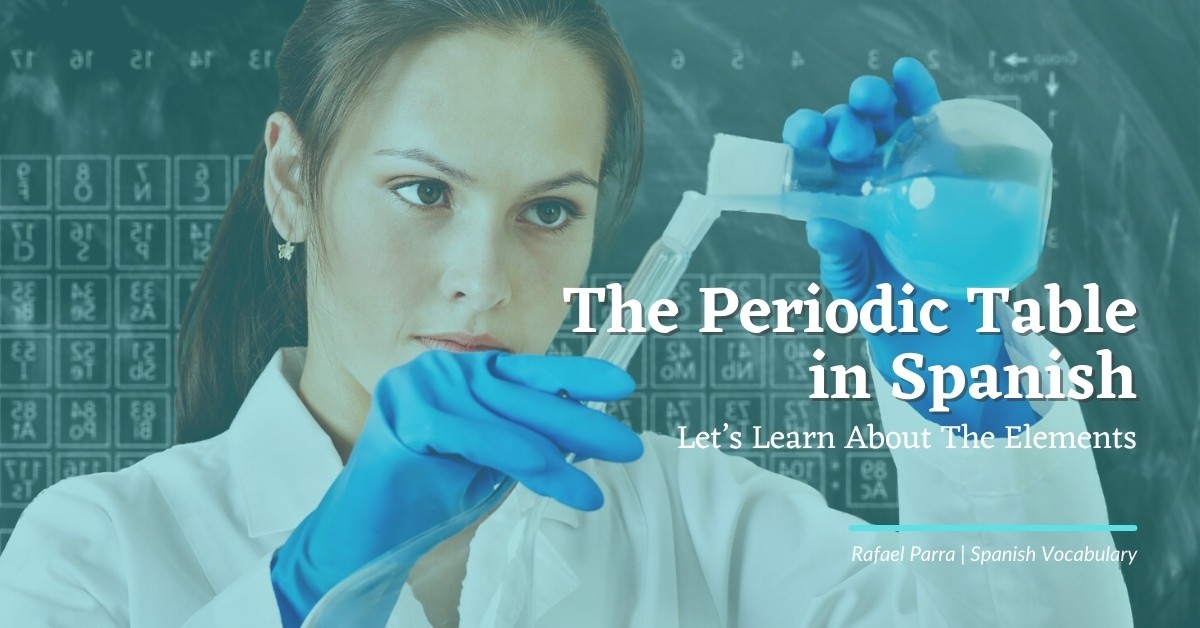
The Periodic Table in Spanish: Let’s Learn About The Elements
Knowing about the periodic table in Spanish is useful even if you’re not in the field of chemistry. Why? We use and interact with many elements on a daily basis, in our jewelry, medication, house maintenance, and even our food. Chemistry is everywhere! From the moment you wake up, there are already numerous chemical reactions happening in your brain and body. Having breakfast,...Read More
All About the Future Perfect Tense in Spanish
Why do you need to learn the future perfect tense in Spanish if you already know the simple future? You certainly also know the ir a + infinitivo construction to talk about the future, so the question is valid. However, if you want to speak about the future like a native speaker, you must absolutely learn the future perfect. Why? Keep reading. First of all, let’s be ambitious....Read More
De Vacaciones: How to Talk About Your Vacation in Spanish
Talking about your vacaciones in Spanish is entertaining, and it enables your friends and family to join you in those unique experiences and memories. So, how about practicing your Spanish in this fun and endearing way? In this blog post, I break down all the essentials you need to master talking about your vacaciones in Spanish like a native speaker. Pack your bags, and...Read More
Entender Conjugation: Free Spanish Lesson and PDF
Are you ready to understand the entender conjugation? This Spanish verb means “to understand.” Its other English translations include “to see,” “to follow,” and “to get.” Entender conjugation is stem-changing. In many of the forms, the e changes to ie. For example: Tú me entiendes.You get me. Today, you’ll learn the entender conjugation in three moods: indicative...Read More
20 Ways to Say You’re Embarrassed in Spanish
Tired of saying “I’m sorry” because you don’t know how to say you are embarrassed in Spanish? Avoid feeling awkward and improve your conversation skills at the same time with this handy blog post! Welcome to the ultimate guide on all the ways to say you feel embarrassed in Spanish. After you read this article, you’ll be able to: Say the correct words in the right...Read More
12 Ecuadorian Slang Words for Everyday Use
Ecuadorian slang, just like any other slang in the world, has some distinctive and unique words that only Ecuadorian people understand. Unless, that is, you learn them from an insightful online blog such as this one. Ecuador is a beautiful country with a colorful culture that enriches the Spanish language with new informal words coming from its streets. These words are called slang and in...Read More
Your Ultimate Guide to Conditions, Illnesses, and Diseases in Spanish
Knowing how to discuss certain details of disease in Spanish is a crucial skill set for travelers, volunteers, and medical students. In fact, international medical programs are a common reason why you’ll need to learn about diseases in Spanish as you travel through Latin America or Spain while helping people in need. Even if you don’t plan to go abroad on a medical program, Spanish...Read More
¡No puede ser! 10 Common Spanish Expressions of Doubt and Denial
In order to use Spanish expressions of doubt and denial you need to master first how to use the subjunctive mood. Because, in Spanish, doubt and denial are part of the weird realm of the subjunctive. If you’re not sure about something, or better, you are sure that something is not as it seems, you need to use Spanish expressions of doubt and denial. In this post I’ll...Read More
9 Coordinating Conjunctions in Spanish Essential to Know
Asking, “Do I need to learn coordinating conjunctions in Spanish? Is it absolutely necessary?” is like asking if you need to eat to live. Of course you do! Coordinating conjunctions are essential for making yourself understood. The truth is, sentences without coordinating conjunctions make no sense. Do you know why? Keep reading to find out! In this blog...Read More