

How to Use ‘Lo Que’ and ‘Lo De’ in Your Conversations
As a Spanish professor, I must admit that it surprised me the first time a student asked me about the difference between lo que and lo de. I hadn’t considered it a grammar dilemma but then I realized that it’s most likely a problem for native English-speaking students. Why? In both cases, you use them to replace other words without saying exactly what you mean and you can also...Read More
Llevarse vs llevar: What’s Their Difference in Meaning?
Do you know the difference between llevarse vs llevar? Both of these Spanish verbs generally refer to the action of carrying or taking someone or something somewhere. However, by digging a little deeper, we’ll see that Spanish speakers use them in a variety of ways. Due to the overlap between the two, it’s natural for Spanish learners to confuse llevarse vs llevar. Read this...Read More
Sinalefa: Why Spanish Isn’t Actually Pronounced as It’s Written
Why do you find yourself at first listen disoriented by native Spanish speakers? You have the sinalefa to thank for that. You think, “Wait! What happened? If I can read Cervantes in the original version, why can’t I understand the guy selling me a newspaper?” There’s a reason for that. When you hear a native person speaking Spanish, and especially if they are in a hurry, you...Read More
Aquí vs Acá: The Ultimate Guide to ‘Here’ in Spanish
Aquí vs acá, have you ever wondered what’s the difference between these two tiny words? Have you searched online for help to be able to distinguish the situations when you’ve got to use one versus the other? I’m sure you did. We all did. You came to the right place, and I promise to provide you with the ultimate guide to how to use “here” in Spanish. I will destroy some myths that teem on...Read More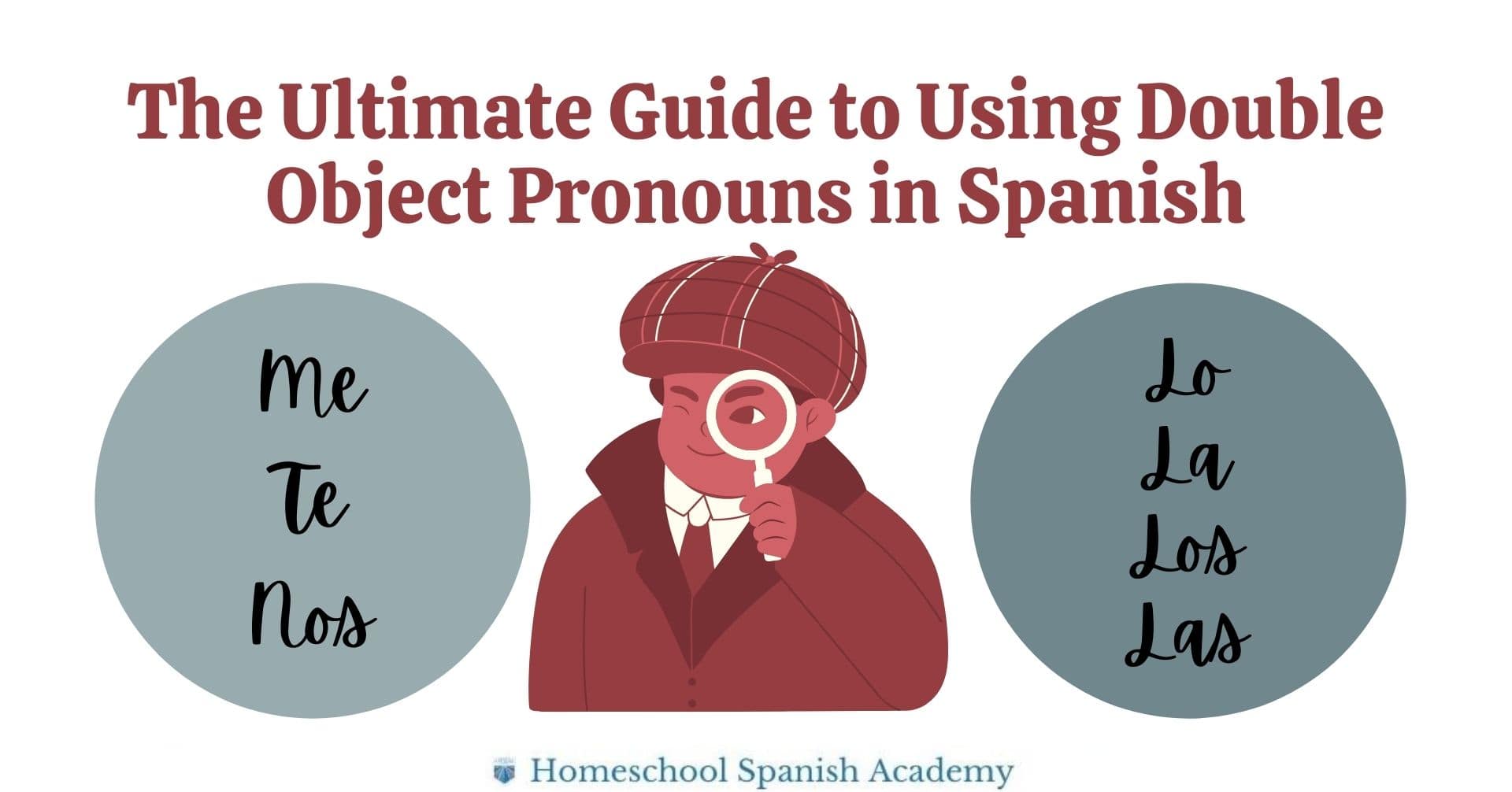
The Ultimate Guide to Using Double Object Pronouns in Spanish
Are double object pronouns in Spanish tripping you up? Some of the challenges that learners face include the confusing similarity of these tiny words, the seemingly unpredictable placement, and when to change them to se. Ultimately, the whole topic can feel overwhelming and impossible to understand if it’s not been well-explained. Well, I’m here to help! I promise we’ll take...Read More
How to Say ‘Again’ in Spanish Using the Verb ‘Volver’
Have you ever wondered how to say “again” in Spanish? It may seem like an insignificant word, but when you think about it, it conveys an idea that we use a lot in our everyday life. There are different ways to say “again” in Spanish, and today we’ll see the most common ones—and especially using the Spanish verb volver. We’ll explore the qualities of this word as an irregular...Read More
How to Master the Passive Voice in Spanish
Surprisingly, the passive voice in Spanish works in a similar way to the English passive voice—that is, they indicate that the action of the verb itself is more important than whoever is carrying it out. While this form may be somewhat common, the passive voice is far from natural as a way of speaking or even writing. Mastering the passive voice in Spanish implies understanding the...Read More
Oír Conjugation: Free Spanish Lesson and PDF
Are you ready to hear about oír conjugation? The Spanish verb oír means “to hear,” and it refers to the sounds we hear, as opposed to those we listen to. What sounds can you hear right now? You might be hearing the cars go by or someone talking. If you’re in nature, you might be hearing birdsong or the sound of the wind. Oír is a highly irregular verb, so pay attention to...Read More
How to Master Spanish Sentences with Verbs and Correct Verb Tenses
Many different ways exist to write and say Spanish sentences with verbs that change depending on their context. Most of the time, conjugation rules give us comprehensive ways to properly use Spanish verbs. Other times, irregular verbs may present a real challenge. A great way to learn all the different Spanish sentences with verbs is by looking at examples. Spanish sentences...Read More