
How Teens Can Learn Spanish Fast with Semana Santa Vocabulary
Starting from zero in high school can feel like you’re already behind. I’ve had so many conversations with parents who tell me the same thing: “I wish we had started earlier.” But here’s the truth I always share: your teen is not too late. In fact, with the right approach, they can make meaningful, fast progress. One of the smartest ways to do that is by learning Spanish through cultural...Read More
25 Spanish Words Kids Need to Talk About Apps, Tablets, and Digital Play, Without Sounding Like a Textbook
If your child already loves tablets, apps, or digital games, you already have a powerful Spanish-learning tool in your home. The key is not adding more screen time; it’s turning the screen time that already exists into meaningful, real-life Spanish conversations. For parents like Sofia, who already speak strong Spanish, the goal isn’t basic vocabulary like hola or gracias. The goal is to...Read More
Object Pronouns Without Confusion: Where Do “Lo, La, Le, Se” Go in a Sentence?
Have you ever understood every Spanish word in a sentence… but still felt lost because the order felt strange? If you’ve thought, “Why do pronouns move around in Spanish?” — you’re not alone. This is one of the biggest hurdles for intermediate learners. You know the vocabulary. You know the verbs. But suddenly you hear “se lo dije” and your brain pauses. Here’s the good news: Spanish...Read More
The Hidden Grammar Rule: When Spanish Uses Double Negatives (And Why That’s GOOD)
Have you ever read a Spanish sentence and thought, Wait… didn’t they just say ‘not’ twice? If Spanish has ever felt a little backwards to you, you are not alone. Many English speakers grow up hearing that double negatives are “wrong.” But here’s the surprising truth: in Spanish, double negatives aren’t mistakes — they’re clarity. And once you understand how they work, you unlock a huge...Read More
Why So Many Latin American Desserts Are Served Warm (and Why Kids Love That)
Warm desserts aren’t an accident; they’re cultural. If you’ve ever watched your child cradle a bowl of arroz con leche or sip atole slowly, you already know this isn’t just about food. Something else is happening in that moment. Comfort settles in. Conversation stretches out. Language softens. For families raising children with Spanish as a lived language, warm desserts often feel familiar...Read More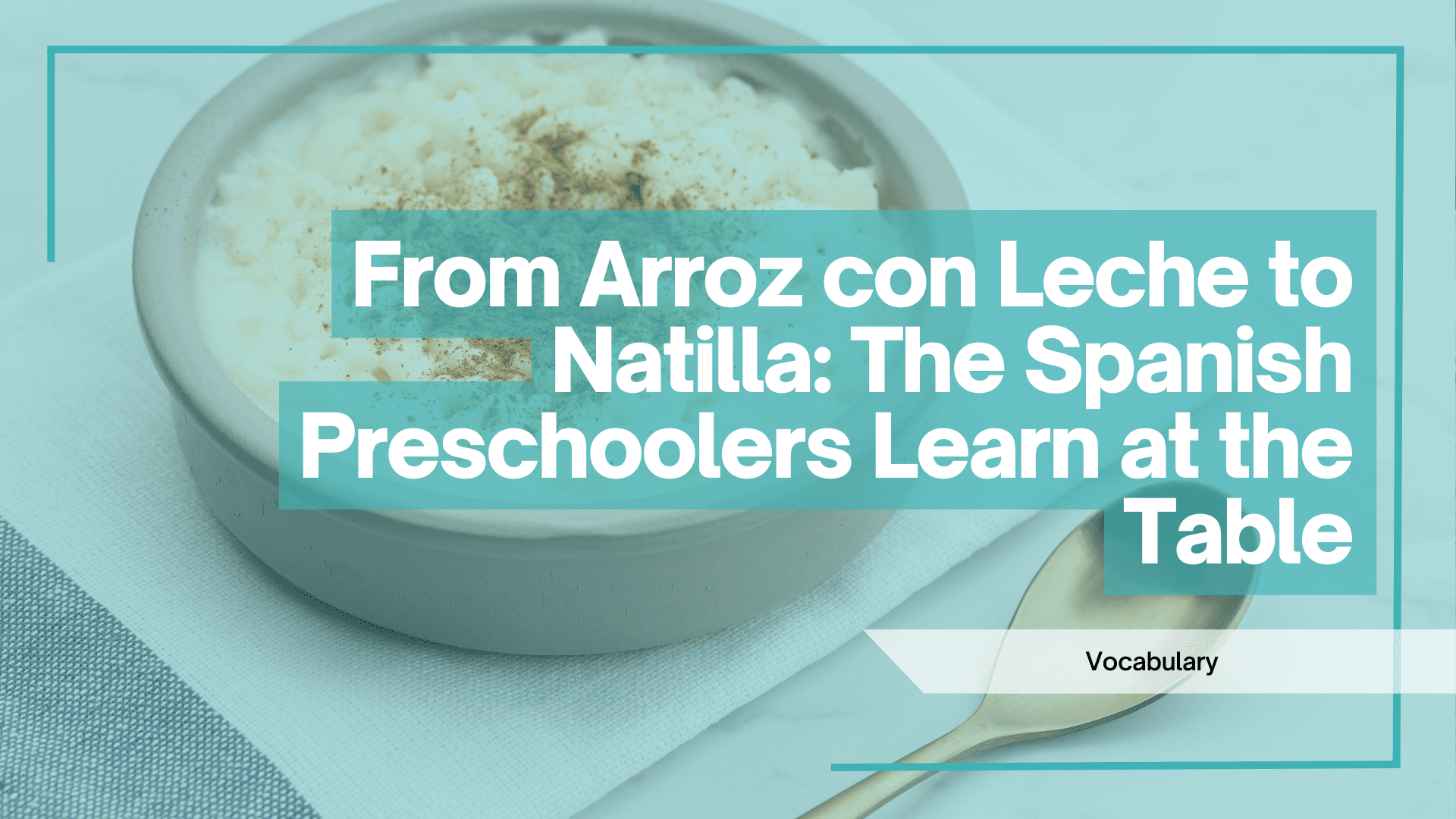
From Arroz con Leche to Natilla: The Spanish Preschoolers Learn at the Table
Some of the most advanced Spanish your child hears doesn’t happen in class—it happens at dessert. It happens when the spoon pauses mid-air, when someone asks for “un poquito más,” or when a preschooler tries to explain why natilla is thicker than arroz con leche. These moments may feel ordinary, but linguistically, they’re anything but simple. If you’re raising a child with strong Spanish...Read More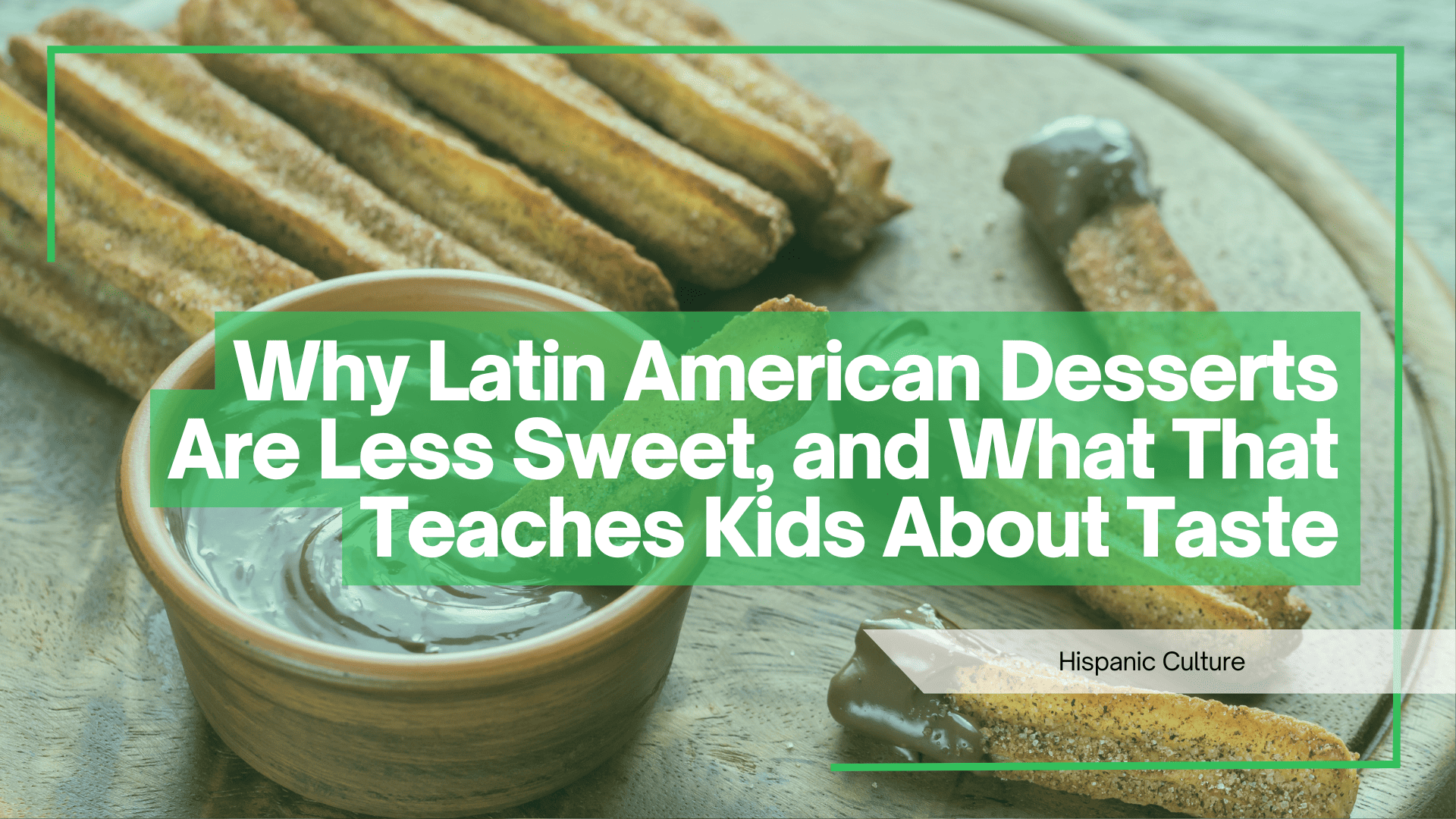
Why Some Latin American Desserts Are Less Sweet, and What That Teaches Kids About Taste
Not all desserts are meant to be sugary, and that’s intentional. If you’ve ever watched your child happily eat arroz con leche without asking for sprinkles, or enjoy a warm slice of capirotada without missing frosting, you may have noticed something interesting: their sense of taste is being shaped by culture. And that’s a very good thing. As a parent raising a child with strong...Read More
From Games to Grammar: How Educational Technology Can Teach Structure Without Boring Kids
If you’ve ever watched your child happily play a Spanish “learning game” and then realized they can’t actually use what they’ve learned, you’re not imagining things. As parents, we want learning to feel joyful, but we also want it to work. The good news is that it doesn’t have to be one or the other. With the right approach, educational technology can blend games and grammar in a way that...Read More
Why Kids Learn Pronunciation Better Through Live Video Than Through Apps or Videos
If you’ve ever heard your child confidently say a Spanish word almost right, and wondered whether it would fix itself over time, you’re asking the right question. Pronunciation isn’t just a finishing touch in language learning. For young beginners, it’s part of the foundation. As a parent, I’ve learned that how kids learn pronunciation matters just as much as what they learn. And when...Read More