Spring Activities That Actually Help Your Teen Earn Spanish Credit (Not Just Stay Busy)
Not all spring activities are equal; some actually move your teen forward academically. If you’re anything like me, spring brings a mix of relief and pressure. The weather is better, schedules open up a bit, and suddenly there are a hundred “good” options for your teen’s time—sports, outings, camps, family trips. But here’s the real question I always come back to: Is this helping my...Read More
From ‘Hola’ to High School Credit: A Spring Plan for Beginner Spanish Learners
Your teen doesn’t need years; just the right plan this spring. If you’ve been thinking, “We should have started Spanish earlier,” you’re not alone. I hear this from so many parents of high schoolers who feel like they’re already behind. But here’s the truth: with the right structure, support, and consistency, your teen can go from knowing a few scattered words to earning real high school...Read More
25 Essential Semana Santa Words Your Teen Can Actually Use in Real Conversations
Most beginners memorize long vocabulary lists… and then freeze the moment they try to speak. If your teen is starting Spanish in high school, the goal isn’t to know more words; it’s to know the right words. The ones they can actually use in real conversations. That’s why I love using themes like Semana Santa. Instead of random vocabulary, your teen learns words that naturally connect,...Read More
How Teens Can Learn Spanish Fast with Semana Santa Vocabulary
Starting from zero in high school can feel like you’re already behind. I’ve had so many conversations with parents who tell me the same thing: “I wish we had started earlier.” But here’s the truth I always share: your teen is not too late. In fact, with the right approach, they can make meaningful, fast progress. One of the smartest ways to do that is by learning Spanish through cultural...Read More
25 Spanish Words Kids Need to Talk About Apps, Tablets, and Digital Play, Without Sounding Like a Textbook
If your child already loves tablets, apps, or digital games, you already have a powerful Spanish-learning tool in your home. The key is not adding more screen time; it’s turning the screen time that already exists into meaningful, real-life Spanish conversations. For parents like Sofia, who already speak strong Spanish, the goal isn’t basic vocabulary like hola or gracias. The goal is to...Read More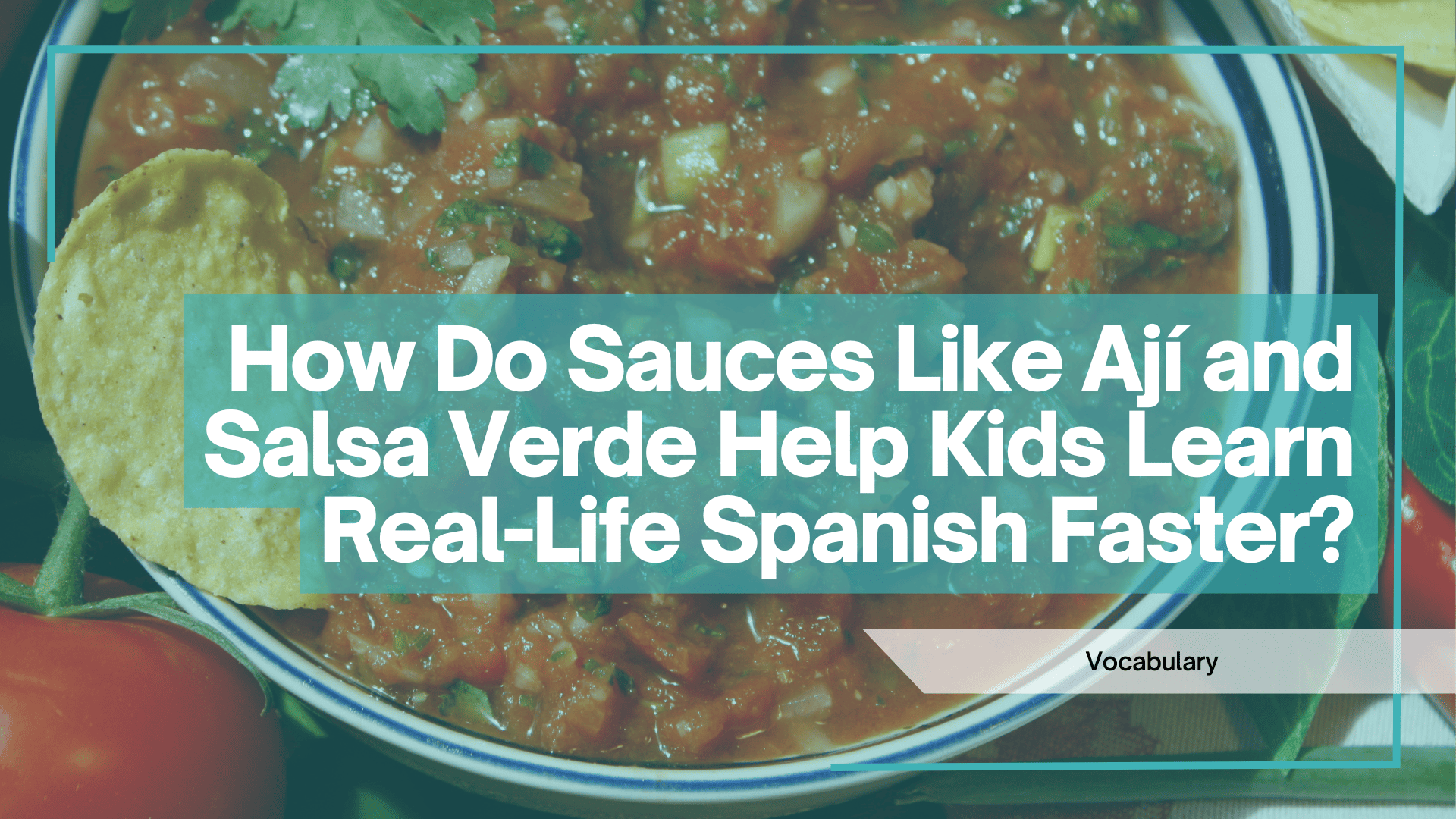
How Do Sauces Like Ají and Salsa Verde Help Kids Learn Real-Life Spanish Faster?
If you’ve ever sat at a table in Latin America, you’ll notice something quickly: flavor is often added at the table, not just during cooking. That means conversations naturally include words about sauces, spice levels, sharing condiments, and describing taste — and that’s exactly where real-life Spanish happens. For busy parents like Emily, this is powerful. Food vocabulary is:...Read More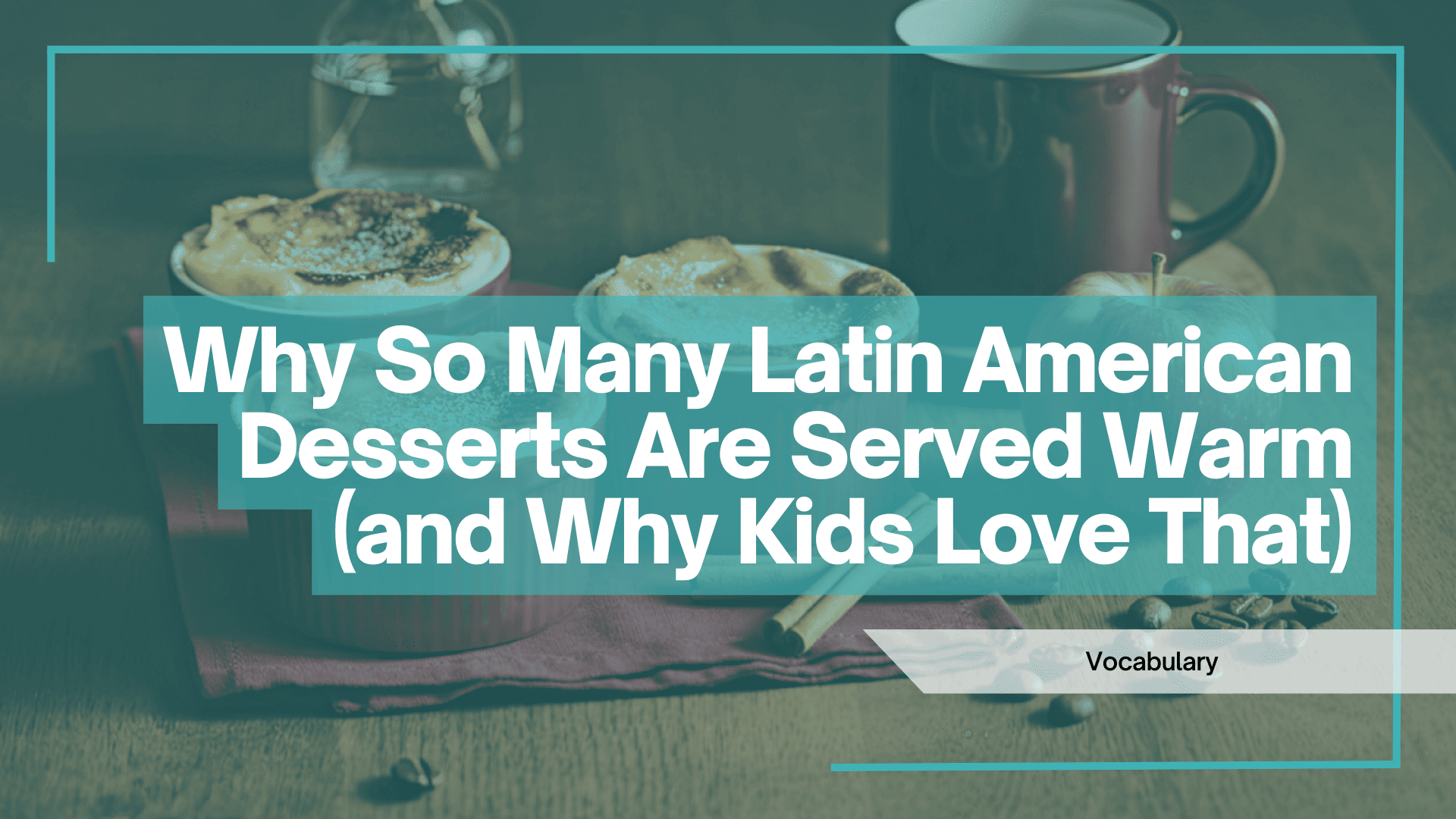
Why So Many Latin American Desserts Are Served Warm (and Why Kids Love That)
Warm desserts aren’t an accident; they’re cultural. If you’ve ever watched your child cradle a bowl of arroz con leche or sip atole slowly, you already know this isn’t just about food. Something else is happening in that moment. Comfort settles in. Conversation stretches out. Language softens. For families raising children with Spanish as a lived language, warm desserts often feel familiar...Read More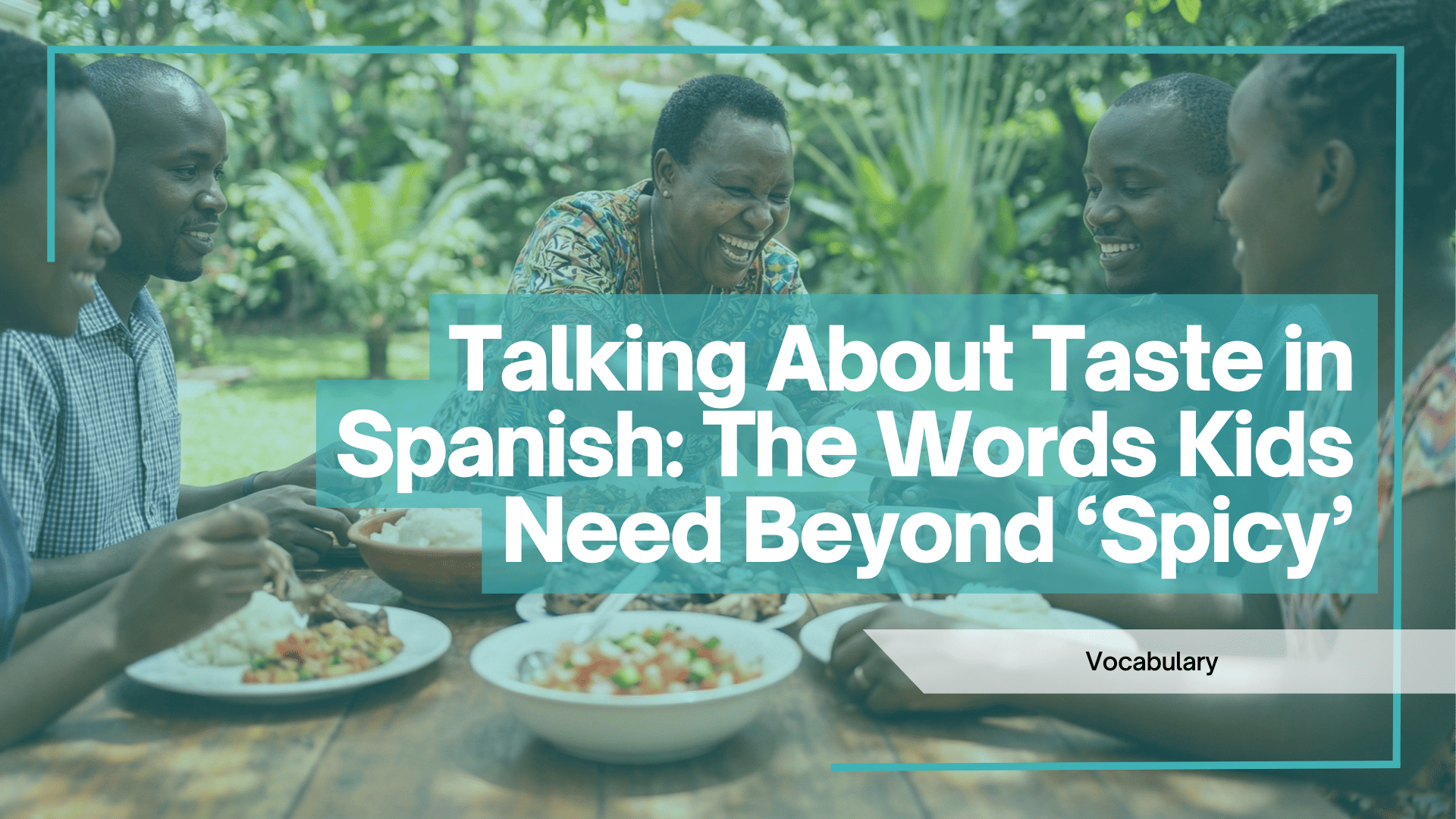
Talking About Taste in Spanish: The Words Kids Need Beyond ‘Spicy’
If everything is just “spicy,” conversations stop too soon. I’ve watched it happen so many times at family meals: a plate is passed, a bite is taken, someone asks how it tastes, and the answer is a single word: picante. End of exchange. For kids who already speak some Spanish, that one-word reply can quietly shut down what could have been a warm, connecting moment. The good news is that...Read More
Valentine’s Day Is One of the Best Times to Practice Advanced Spanish Conversation
Romantic holidays create the kind of language that textbooks can’t teach. Every year, Valentine’s Day shows up with flowers, cards, and conversations that feel just a little more emotional than usual. And if your child already speaks Spanish at an advanced level, this holiday quietly becomes one of the best opportunities to practice real, meaningful Spanish conversation, the kind that...Read More