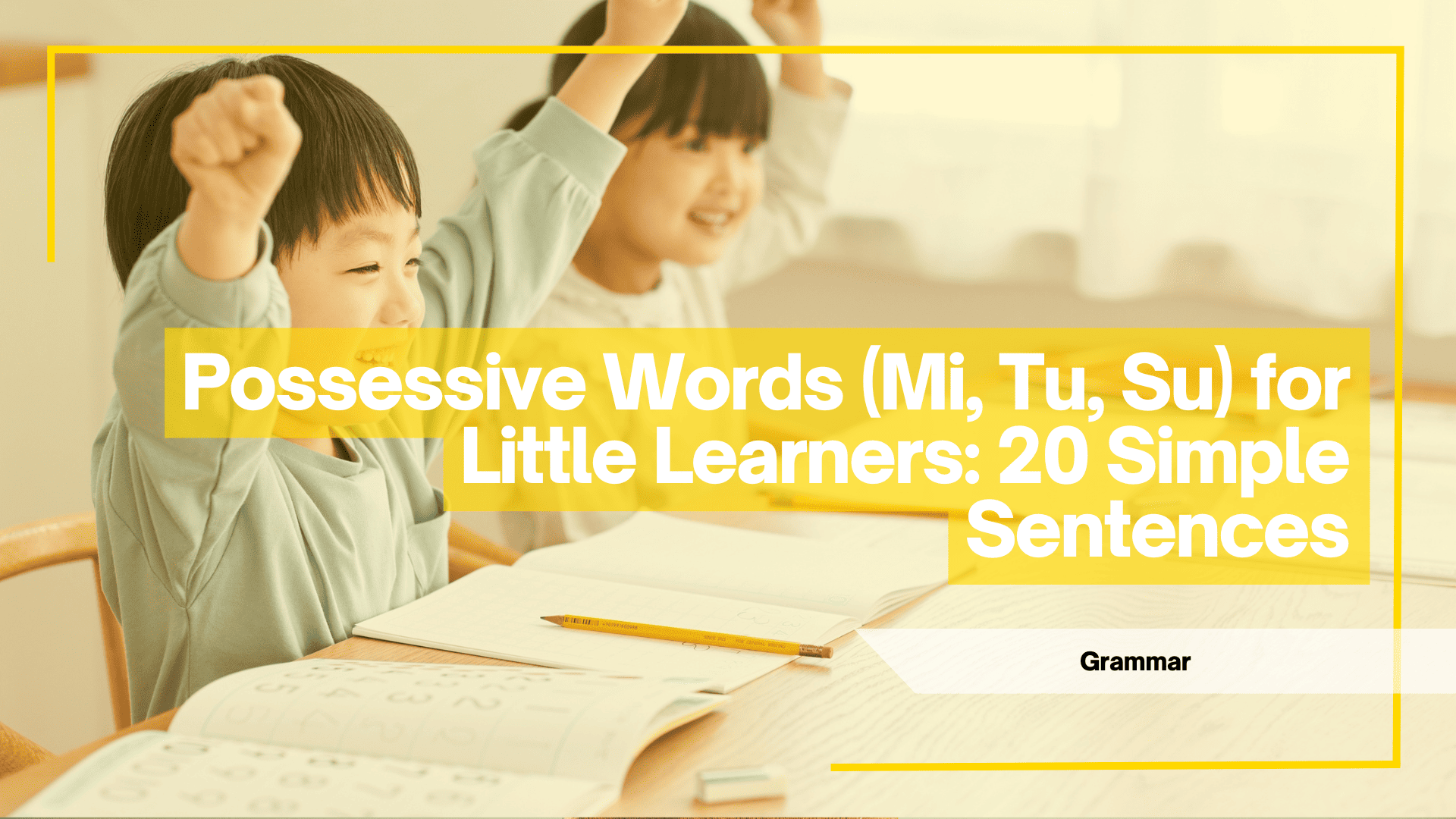
Possessive Words (Mi, Tu, Su) for Little Learners: 20 Simple Sentences
When your preschooler starts saying “Mi juguete” (“my toy”) or “Tu libro” (“your book”) in Spanish, they’re taking a huge leap toward real communication. Possessive words like mi, tu, and su might seem tiny, but they help your child talk about the things and people they care about—just like they do in English. It’s one of those beautiful milestones when Spanish stops feeling like a list...Read More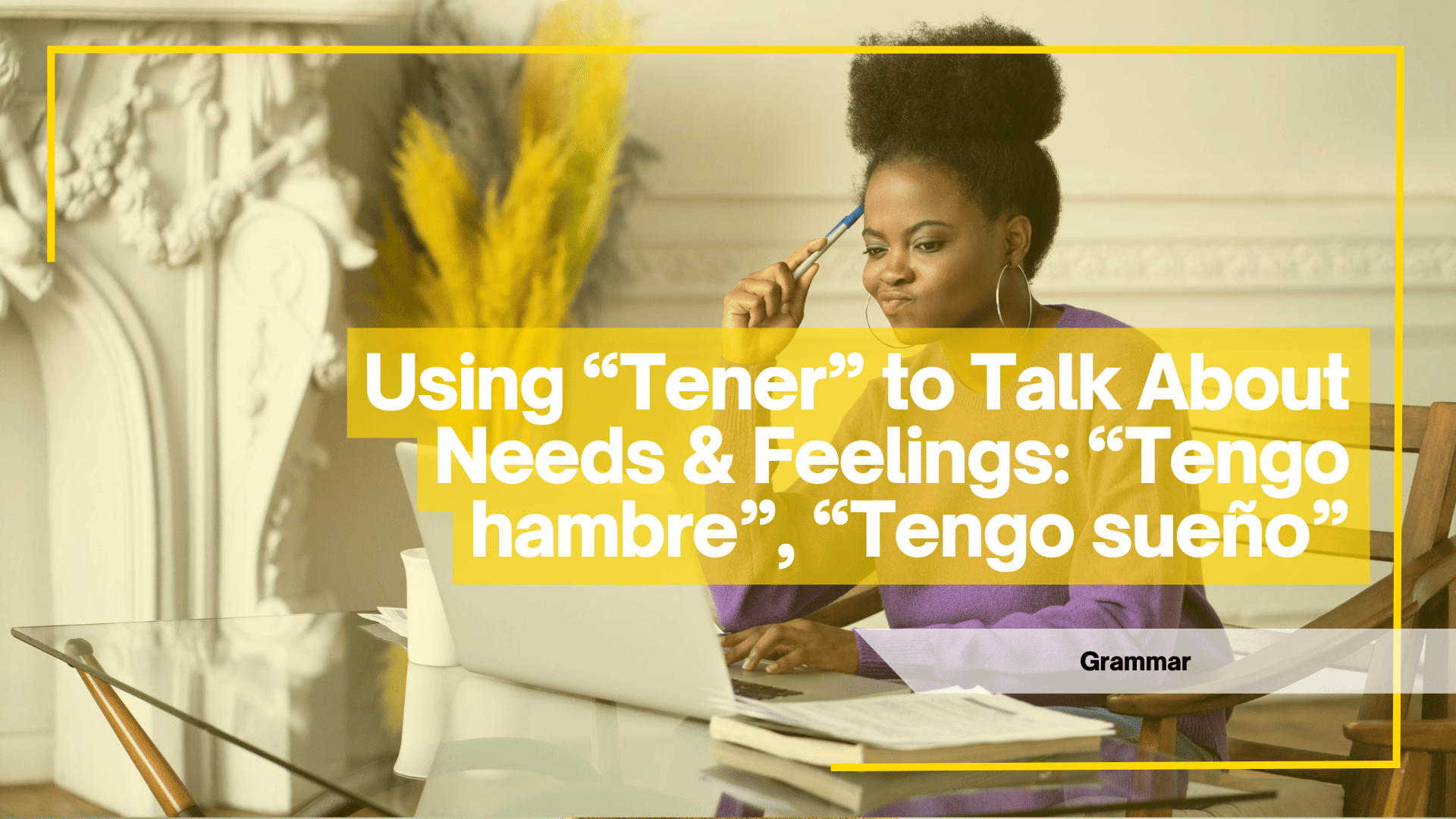
Using “Tener” to Talk About Needs & Feelings: “Tengo hambre”, “Tengo sueño”
If you’ve ever heard your child say “Estoy hambre” or “Soy sueño”, you’re about to help them unlock one of the most natural patterns in Spanish speech: using tener for needs and feelings. This grammar concept is a big milestone because it’s how native speakers express everyday sensations like hunger, sleepiness, or coldness—things kids talk about constantly! Mastering these expressions helps...Read More
Simple Spanish for Bedtime Routines: 30+ Words & Lullaby Phrases
After a long day of activity, bedtime is the one moment when everything slows down. It’s when children feel safe, loved, and ready to rest—and it’s also a wonderful opportunity to add Spanish into your daily rhythm. For many parents, finding time to practice Spanish can feel impossible between meals, playtime, and work. However, integrating language learning into bedtime transforms an...Read More
30+ Spanish Tech Vocabulary Your Middle Schooler Already Uses
Your middle schooler lives in a digital world—chatting, gaming, posting, and streaming daily. But if you’ve ever thought, “How can I make Spanish relevant to that world?” you’re not alone. Many parents feel their child loses interest when Spanish feels disconnected from real life. The good news? You can turn everyday screen time into learning time with Spanish tech vocabulary. Teaching...Read More
40 Spanish Playtime Vocabulary Words: Make Learning a Game
If your preschooler can sing every word of their favorite song, they can learn Spanish too—especially when learning feels like play. For busy parents like you, it can feel overwhelming to fit Spanish practice into everyday life. However, the secret is simpler than you think: the best time to teach Spanish is during the moments you’re already spending together. This list of Spanish...Read More
Celebrate Día de los Muertos: 20 Cultural Vocabulary Words + Activity for Kids
Sugar skulls, candles, and colorful flowers—Día de los Muertos (Day of the Dead) is one of Latin America’s most vibrant traditions. But beyond its beautiful decorations, this celebration offers families a unique way to learn Spanish through culture. For parents teaching a middle schooler who’s just beginning their Spanish journey, combining cultural learning with language is the perfect...Read More
How to Make Spanish Family Time Fun: 15 Food & Drink Words + a Recipe
If your child lights up at taco night but sighs at Spanish homework, it’s time to bring language learning to the table—literally! For middle school beginners who have never taken Spanish before, learning through Spanish food vocabulary offers an easy win. Every meal becomes a mini lesson, every recipe a cultural adventure. Spanish food vocabulary is especially powerful because it...Read More
Create Your Own Calavera Story: A Halloween Writing Activity in Spanish
Have you ever seen a sugar skull and wondered what it really means? In Mexico, these colorful symbols aren’t meant to be scary. They’re meant to celebrate life. And behind the bright colors and big smiles of these calaveras (skulls) lies a beautiful tradition that can help your child fall in love with Spanish. This Halloween, instead of another worksheet or grammar drill, try something...Read More
Haunted Places in Latin America: Learn Geography with a Ghostly Twist
What if you could take your child on a thrilling trip through Latin America without leaving your living room? October is the perfect time to mix geography, history, and a little bit of mystery. In today’s adventure, we’re exploring five haunted places that teach fascinating stories about Latin American culture and a few spooky Spanish words. According to a 2024 study, 68% of parents say...Read More