Spanish Words with Multiple Meanings in Latin America
Did you know that there are plenty of Spanish words with multiple meanings? You may learn a word in one Spanish-speaking country and then travel to a different one, where that word has an entirely different meaning. Moreover, sometimes this can happen inside the same country! Do you want to know and learn how to use these words? Keep reading all about the Spanish words...Read More
How Many Words Are in the Spanish Language? Really?
In this article, we will try to solve the big question: how many words are in the Spanish language? It’s a somewhat complicated question since languages are constantly evolving since they’re one of the most important forms of human communication. To keep a specific count of how many words the Spanish language has is a complex endeavor. Spanish is one of the most spoken in...Read More
Avoiding Common Errors in Spanish Grammar
Do you want to know the most common errors in Spanish grammar? Would you like to know how to avoid them? Well, today is your lucky day! Keep reading and find out why it’s so important to master Spanish grammar. You’ll learn some of the most common errors in Spanish grammar, how to avoid them, and where to find valuable resources to practice grammar at home. Join 559...Read More
El or La? Mastering Spanish Gender and Articles
Spanish gender and articles are essential if you are learning this beautiful language. As a learner, you might find yourself pondering whether to use el or la, struggling to decide whether a noun is masculine or feminine in Spanish. Fear not! In this article, we will unveil the mystery of Spanish gender and articles, providing you with a comprehensive guide to navigating this...Read More
Ways of Saying ‘Of Course’ in Spanish
Learn how to say of course in Spanish! Learning a new language involves mastering its grammar and vocabulary and also understanding the nuances of expressions and phrases commonly used in conversations. One of these essential expressions is “of course.” Being able to say of course in Spanish in different contexts and situations is crucial for effective communication and...Read More
Spanish Adjectives To Describe Everything You Need
Spanish adjectives are one of the main pieces of the Spanish language puzzle. If you figure out how to use them, you’ll be one step closer to achieving your language fluency goal. But why are adjectives so important in Spanish? And more, how should you use them? Do they work in the same way as in English? Keep reading to learn the answers to these and other questions,...Read More
Your Go-to Guide to Say Safe Travels in Spanish
Wish your friends safe travels in Spanish! Summer vacations have begun, and there are many places where you and your friends or family can go. Many of these tourist destinations are Spanish-speaking countries or cities where you will find a large majority of Spanish-speaking population. Also, your Latin American or Spanish friends will surely return to their native country to visit...Read More
The Best Spanish Essay Writing Tools in 2023
Level up your Spanish texts and become a Spanish essay writer! When we learn a new language, we love to continue exploring new possibilities to practice it. We like to watch movies in the original language, meet and speak with native Spanish speakers, read books, etc. One important skill to keep practicing is writing. Through written words, we can communicate more easily on...Read More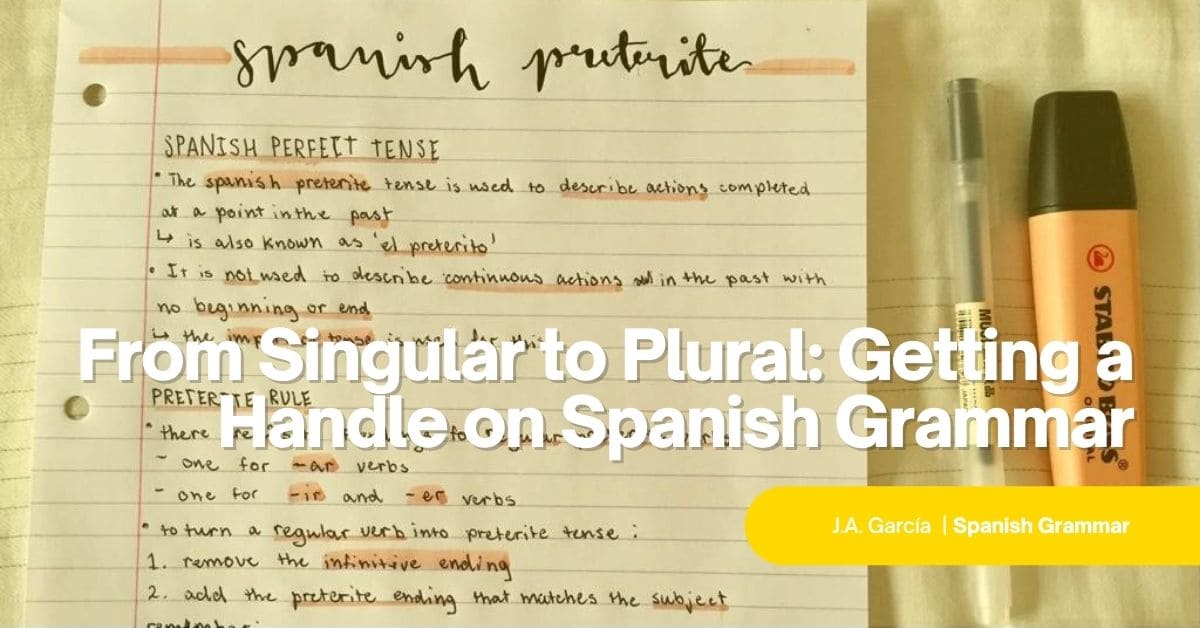
From Singular to Plural: How To Make Spanish Sentences Plural
Just like in English, nouns in Spanish change if they’re singular or plural. But how to make Spanish sentences plural? Don’t worry. With this article, you’ll learn how to make that change, and we’ll even give you all the tools you need to practice and be sure to use each correctly. Let’s go! Join 559 million people on the planet who speak Spanish!Sign up for your free trial...Read More