

¡Guau! 15 Spanish Expressions of Surprise That Will Dazzle You
Spanish expressions of surprise are also known as interjections. You say these words or phrases in an exclamatory tone and capture the attention of your listeners. These expressions are written between exclamation marks. Have fun while learning these useful Spanish words! 15 Excellent Expressions for Different Occasions With these words you can express surprise, amazement,...Read More
Health and Wellness Vocabulary in Spanish
Expanding your vocabulary in Spanish is always beneficial. And learning words and phrases related to health and wellness is a top-notch place to focus. Health and wellness encompasses a vast field of knowledge—everything from the body parts to diet, physical fitness to mental well-being, and quality sleep to mindfulness meditation. Today, let’s explore how to talk about our...Read More
Giving Positive and Negative Feedback in Spanish for Work
Yesterday, during my daughter’s online classes, I had an opportunity to hear her teacher give feedback in Spanish to her and her classmates and it surprised me—in a bad way! Why? While my daughter is only 6, her teacher tends to motivate her young learners with positive feedback like ¡Bien hecho! (Well done!), ¡Wow! ¡Impresionante! (Wow! Impressive!), ¡Qué bonito! (How...Read More
10 Kids Songs About Body Parts in Spanish
What were your favorite kids songs growing up? Which songs taught you something new? Kids are constantly learning, and kids songs are a wonderful learning tool for kids and parents alike. Learning language through kids songs is a way to have fun, practice your skills, and even dance a little. When it comes to finding the perfect songs, it’s all about music and lyrics. Knowing...Read More
Read in Spanish I: Free Spanish Texts for High School Students
Welcome to our “Read in Spanish” Blog Series for High School Students! Our series comprises 8 blog posts bursting with original and entertaining Spanish stories. Each piece in our series aligns with our high school curriculum standards and allows students to practice reading grammar elements they’ve just learned. You are currently on blog post #1. If you’re not yet part of Homeschool...Read More
How to Master Spanish Sentences with Verbs and Correct Verb Tenses
Many different ways exist to write and say Spanish sentences with verbs that change depending on their context. Most of the time, conjugation rules give us comprehensive ways to properly use Spanish verbs. Other times, irregular verbs may present a real challenge. A great way to learn all the different Spanish sentences with verbs is by looking at examples. Spanish sentences...Read More
25+ Spanish Interjections and Exclamations for Spirited Conversations
Spanish interjections are little pieces of the language that help you to express a lot of different emotions. They also help to improve your Spanish by making it sound more natural. Today, we’ll learn what Spanish interjections are, why it’s so important to learn their meanings and usage, and finally, I’ll introduce you to 25 of the most used Spanish interjections and...Read More
How to Form and Use Past Participles in Spanish
Hands down, past participles are one of the most useful pieces of Spanish grammar you can learn. You may argue that you have no idea what a past participle is—and that’s fair, so I’ll make sure to start there—after which you’ll see how truly useful these functional words are. Past participles have many uses and by learning to use them properly, you’ll improve your Spanish speaking...Read More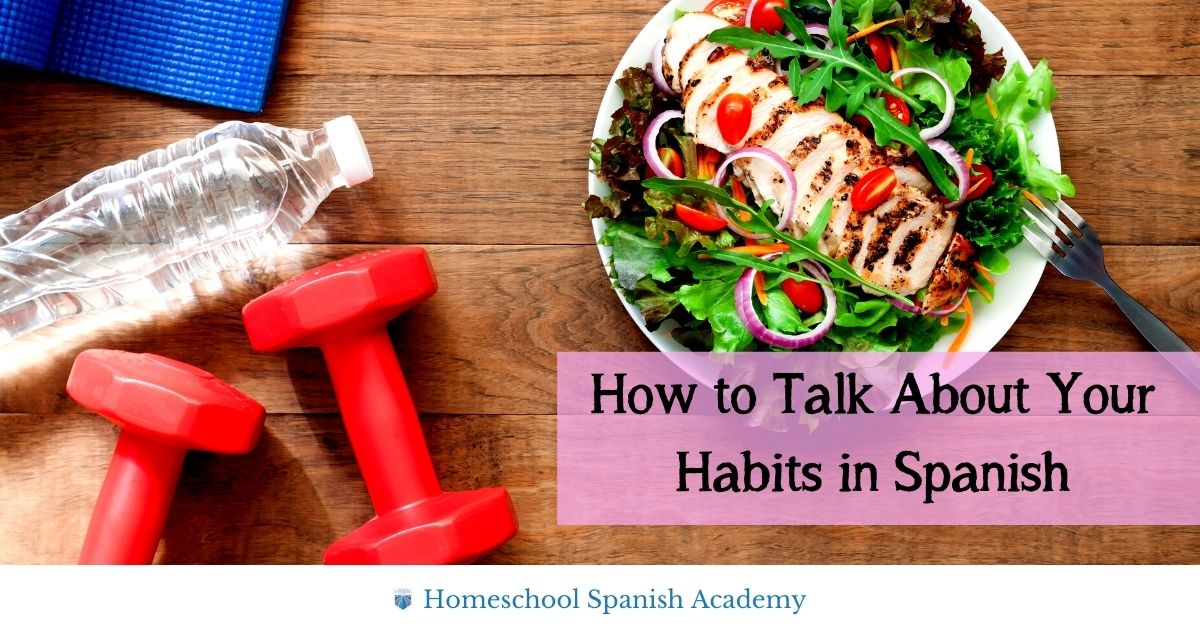
How to Talk About Your Habits in Spanish
Are you looking to form some new habits in Spanish —or in any field of study or area of your life? Experts say, depending on the habit, it takes anywhere from 18 to 254 days to form a new habit. After an average of 66 days, a new behavior becomes automatic. Keep reading to discover the vocabulary and grammar you need to talk about your general, good, and bad habits in...Read More