
Why Kids Learn Pronunciation Better Through Live Video Than Through Apps or Videos
If you’ve ever heard your child confidently say a Spanish word almost right, and wondered whether it would fix itself over time, you’re asking the right question. Pronunciation isn’t just a finishing touch in language learning. For young beginners, it’s part of the foundation. As a parent, I’ve learned that how kids learn pronunciation matters just as much as what they learn. And when...Read More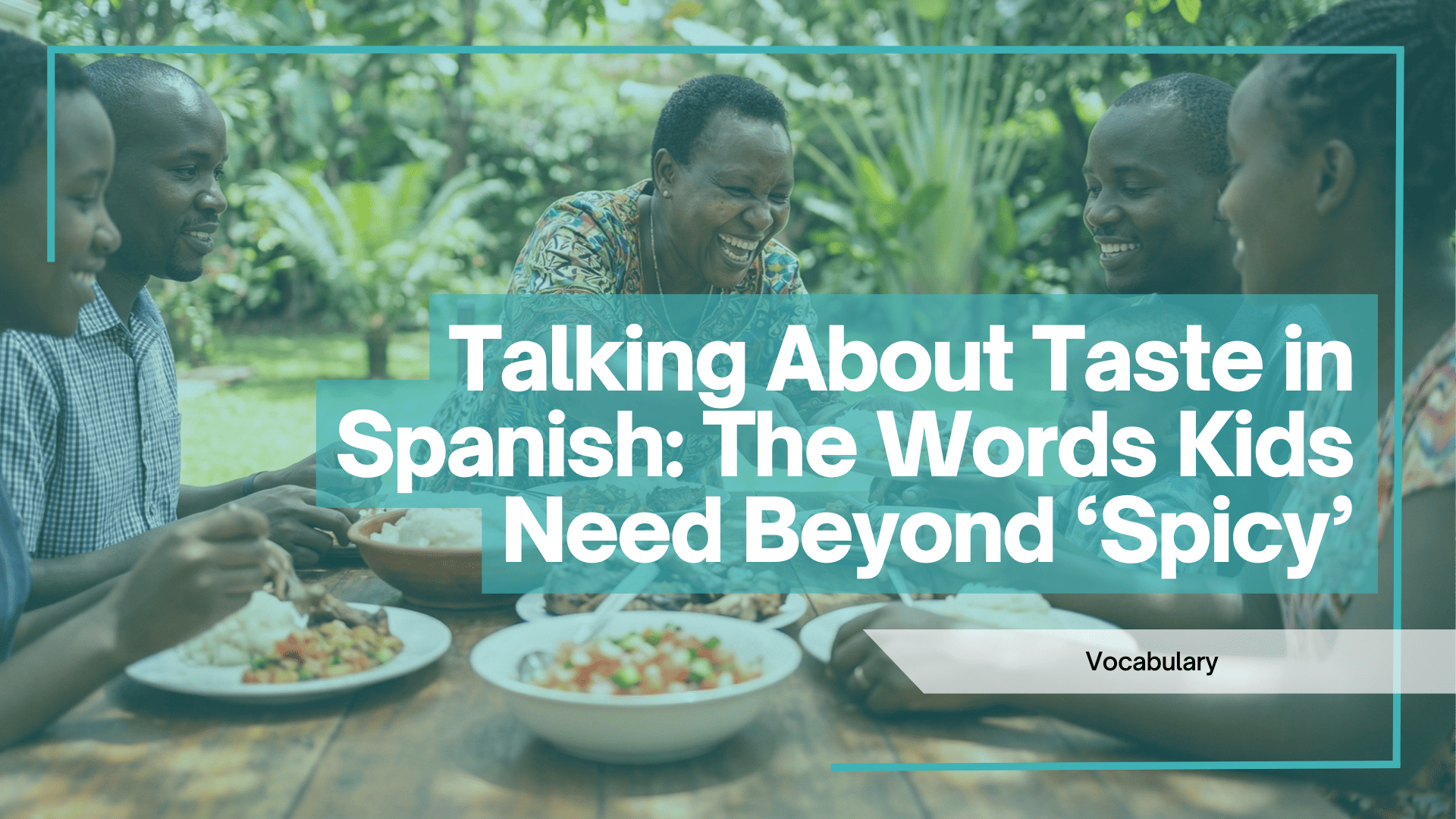
Talking About Taste in Spanish: The Words Kids Need Beyond ‘Spicy’
If everything is just “spicy,” conversations stop too soon. I’ve watched it happen so many times at family meals: a plate is passed, a bite is taken, someone asks how it tastes, and the answer is a single word: picante. End of exchange. For kids who already speak some Spanish, that one-word reply can quietly shut down what could have been a warm, connecting moment. The good news is that...Read More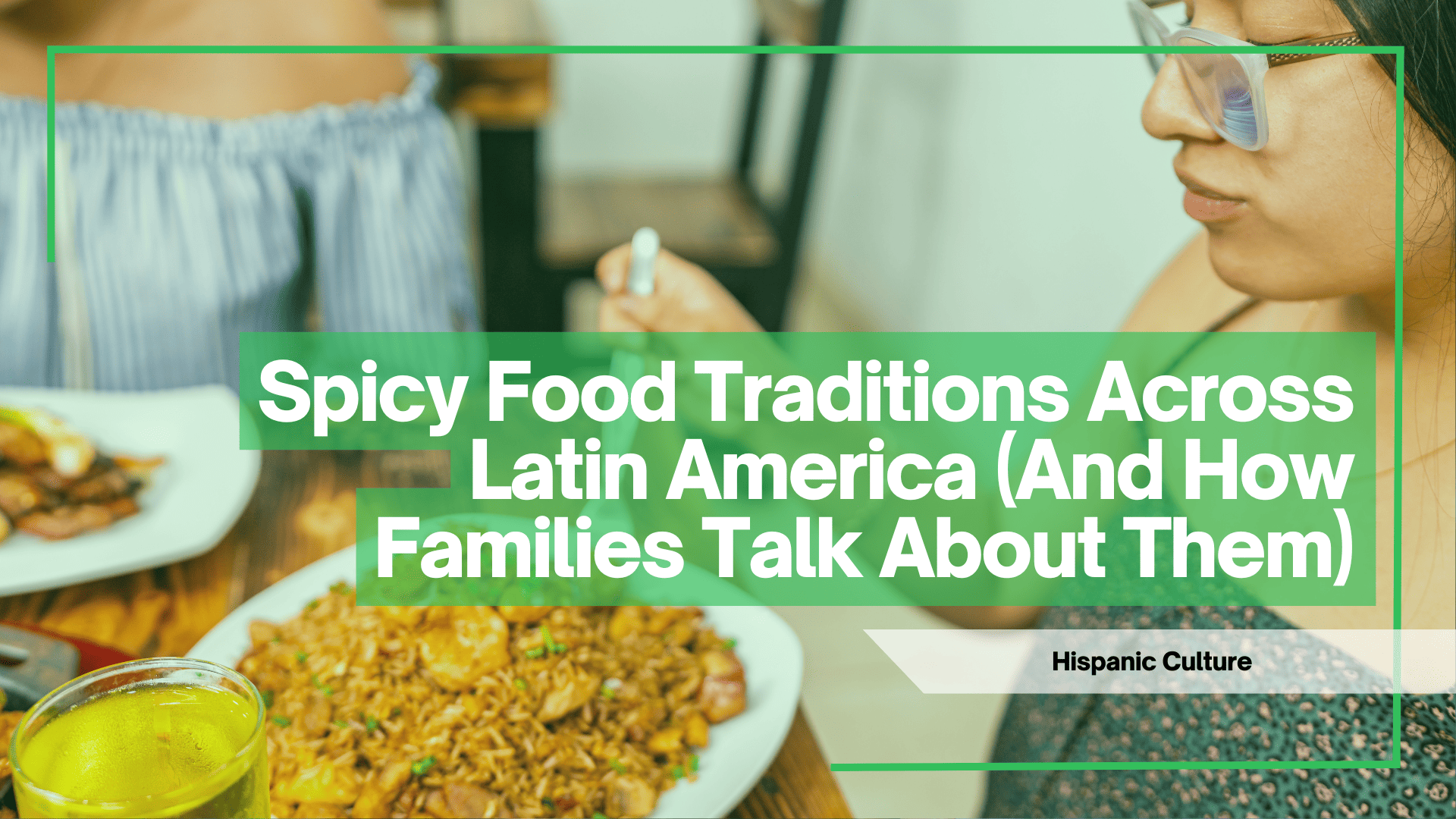
Spicy Food Traditions Across Latin America (And How Families Talk About Them)
Not all spicy food is the same, and neither is the Spanish around it. If you’ve ever noticed that your child understands Spanish better in one family kitchen than another, you’re not imagining it. The food changes, the pace changes, and suddenly the Spanish sounds different, too. As a parent raising a child who can already form sentences in Spanish, I’ve learned that spicy food...Read More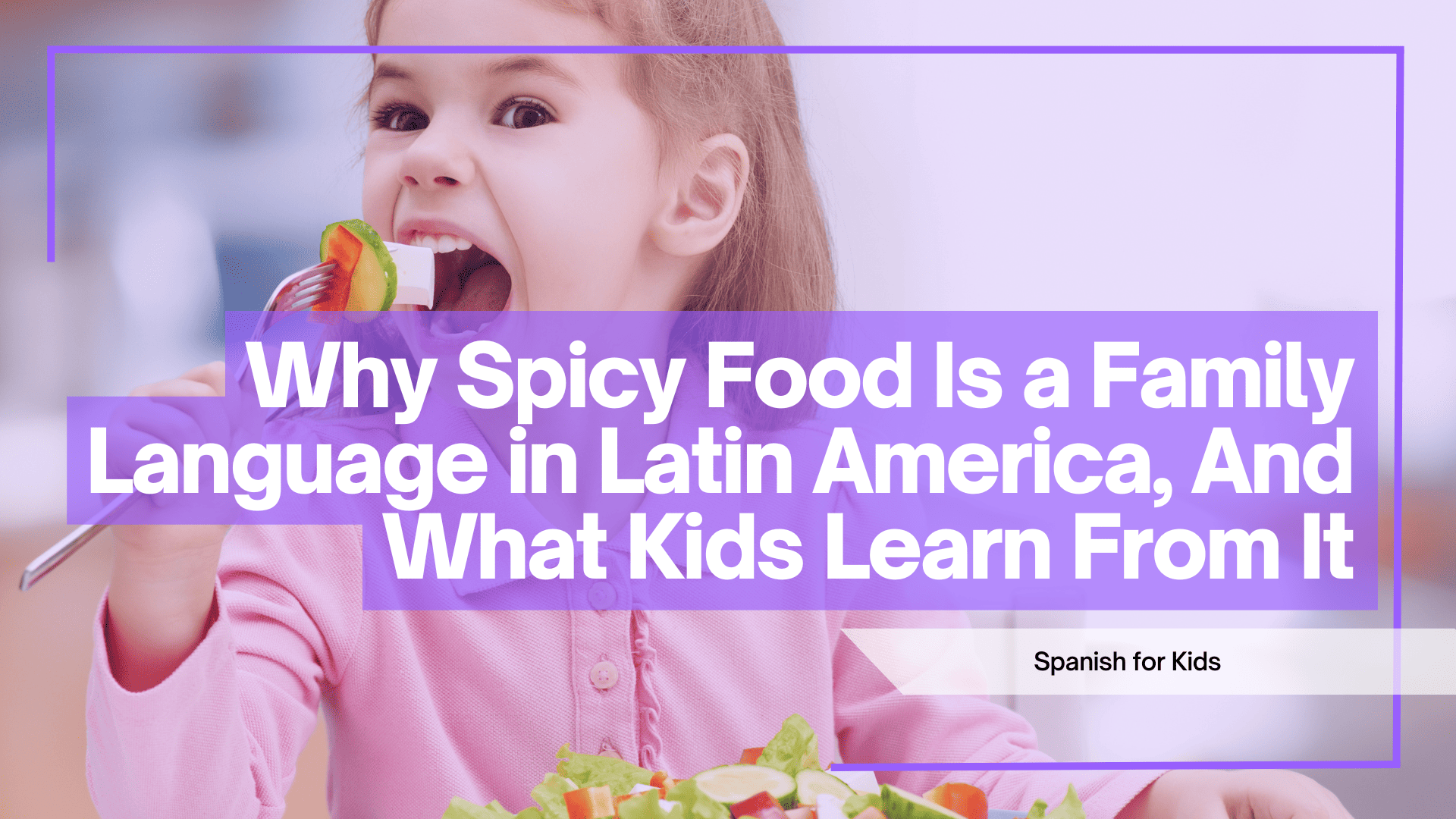
Why Spicy Food Is a Family Language in Latin America, And What Kids Learn From It
In many Latin American homes, the question isn’t if the food is spicy; it’s who can handle it.And if you’ve ever watched your child sit quietly at a family table while everyone else laughs, teases, and reaches for the salsa, you know that moment isn’t really about food. It’s about belonging. As a parent, I’ve come to see spicy food in Latin American families as something much bigger than...Read More
“Te Quiero” vs. “Te Amo”: The Valentine’s Mistake Advanced Learners Still Make
Fluent speakers still get this wrong, and it can change the meaning of an entire relationship. If your child already speaks Spanish comfortably, this might surprise you. After all, “te quiero” and “te amo” both translate to “I love you,” right? But in real Spanish-speaking families, choosing the wrong one can feel awkward, overly intense, or even emotionally confusing. And Valentine’s Day...Read More
From Threads to Identity: How Ancient Weavings Told Stories Before Written Spanish
Long before the Spanish arrived on the continent, Latin American cultures were already “writing” history, just not with words. They recorded identity, status, beliefs, and memory through threads, colors, and patterns. And once you start looking at ancient weavings this way, it becomes impossible to see language as something that lives only in grammar books. I’ve always loved this idea...Read More
Why Soccer Is the Perfect Gateway to Spanish Fluency for Middle Schoolers
Soccer isn’t just a sport in Spanish-speaking countries; it’s a language classroom in motion. If your middle schooler already lights up when a game is on, you may be sitting on one of the most powerful (and overlooked) tools for Spanish fluency. As a parent, I’ve learned that the fastest progress doesn’t always come from adding more worksheets. It comes from giving language a reason to...Read More
From “Año Nuevo” to “Nuevo Comienzo”: Subtle Spanish Expressions That Signal Advanced Fluency
Two phrases can mean “New Year,” but only one sounds like a native speaker. If your child already speaks Spanish comfortably, this is the stage where progress becomes subtle but powerful. The difference between Año Nuevo and nuevo comienzo isn’t grammar. It’s register, intention, and cultural instinct. And those are precisely the signals native speakers listen for when deciding whether...Read More
12 Grapes, 12 Wishes: A Spanish New Year Tradition That Builds Real Conversation Skills
What if a simple New Year’s tradition could help your teen speak Spanish more naturally? Not a worksheet. Not another vocabulary list. Just twelve grapes, a countdown, and a tradition that has helped Spanish speakers talk about hopes, goals, and the future for generations. If your high schooler knows Spanish words but freezes when it’s time to speak, this is exactly the kind of cultural...Read More