
The Ultimate Guide to Nautical and Sailing Vocabulary in Spanish
If you’re passionate about sailing and Spanish, you’ll love this post filled with useful sailing vocabulary in Spanish. Sailing is a beautiful lifestyle that can take you all around the world, so learning its most common terms in another language is a great idea. Keep reading to learn what sailing is and why you should try it, what nautical means, and useful sailing...Read More
50+ Time Expressions in Spanish for Better Conversations
Learning time expressions in Spanish allows you to improve your language skills and to talk more naturally in the language. Because one thing is to be able to communicate in your goal language, but a whole different one is to use expressions that only native speakers master. Keep reading to learn over 50-time expressions in Spanish that will make you sound like a native...Read More
How to Properly Use Spanish Intonation
Learning Spanish involves learning many different parts of the language, grammar rules, conjugation of verbs, spelling—and yes, Spanish intonation! Intonation is a fascinating habit that we don’t even take notice of, unless there’s an error or difference. Otherwise, it just seems to flow naturally in the background of our conversations. When you’re learning a new language,...Read More
What You Should Know About Indirect Objects in Spanish
Indirect objects in Spanish are a key topic to master. Spanish speakers use them in every single conversation. Understanding and knowing how to use indirect objects is essential. Today, let me explain to you what indirect objects in Spanish are and how to use them in a sentence. I promise to give many formulas and examples to make this topic easy to follow. This guide offers an answer...Read More
Venir Conjugation: Free Spanish Lesson and Quiz
If you’re a Spanish learner, you’ve come to the right place for a lesson on venir conjugation! The Spanish verb venir means “to come.” Venir is an irregular, stem-changing -ir verb, similar to seguir. Read this lesson to discover the ins and outs of venir conjugation in the following moods and tenses: Indicative mood (present, past, past imperfect, conditional, and future...Read More
How to Say ‘You’ in Formal and Informal Spanish
If English is the only language you (currently) speak, the you (formal) concept in Spanish is new. Even if you don’t yet know about the formal and informal you in Spanish, you probably already know when to use each one. Would you call the attention of your teacher by shouting out, “Hey dude”? Of course not! A message you write to your boss is surely different from the one...Read More
Understanding the Spanish Subjunctive in Noun Clauses
Do you know how to use the subjunctive in noun clauses? It’s actually an easy topic to grasp if you already have a foundation in Spanish grammar. To access a quick but thorough overview of the subjunctive in noun clauses, keep reading! I cover all the grammar elements necessary to master the topic and give you lots of examples of the subjunctive in noun clauses. At...Read More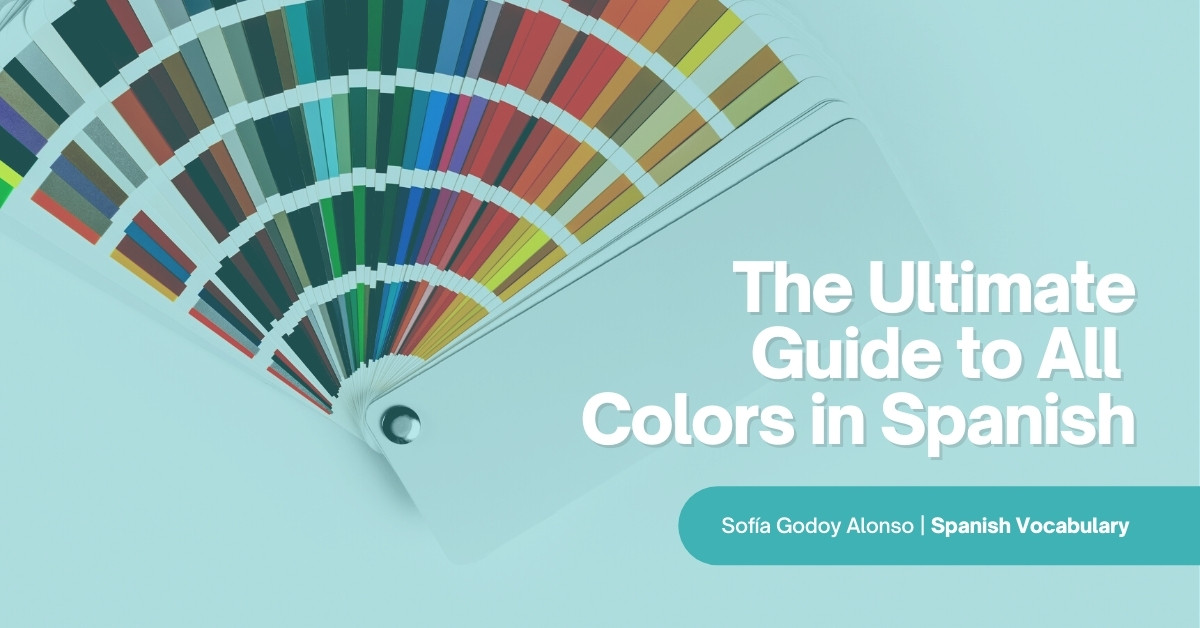
The Ultimate Guide to All Colors in Spanish
The world of colors in Spanish is full of mysteries and wonders to discover. Colors in Spanish and in English are a daily part of life. They bring joy and make our surroundings vivid and visually appealing. Los colores (colors) are possible to admire in decoration, art, clothes, objects, pictures, and living organisms. Above all, colors serve as a form of expression and...Read More
How To Pronounce R and RR in Spanish
The r in Spanish is one of the most challenging pronunciation issues for new learners of the language. Listening to a native Spanish speaker saying carretera or ferrocarril for the first time, always produces a strong impression on my Spanish students. That thrill of the RRs is completely new for them. However, the sound of the rolling r is just a sound like any other. A new and...Read More