

Spanish vs Catalan: Similarities and Differences
The historic debate of Spanish vs Catalan dates back to the roots of romance languages in Europe. Recent events and nationalism in Spain continue to feed it with a level of hostility due to independence efforts from the Catalans. Both languages are deeply connected. As you know, Spanish or Castellano is from Spain and considered the official language, however Catalan is the second most...Read More
How to Use ‘O Sea’ to Sound Like a Native Spanish Speaker
Have you heard the words o sea in Spanish during a conversation? The expression o sea is part of day-to-day Spanish from around the world. It’s used for clarification and applies to different situations that require further explaining. It’s widely used in Mexico, Guatemala, El Salvador, and other Latin American Spanish-speaking countries. O sea can be either a formal and...Read More
How to Use ‘Lo Que’ and ‘Lo De’ in Your Conversations
As a Spanish professor, I must admit that it surprised me the first time a student asked me about the difference between lo que and lo de. I hadn’t considered it a grammar dilemma but then I realized that it’s most likely a problem for native English-speaking students. Why? In both cases, you use them to replace other words without saying exactly what you mean and you can also...Read More
How to Write an Amazing Essay in Spanish
Has your teacher asked you to write an essay in Spanish? Essays are probably the most common type of homework around the world. Teachers want you to write essays because they’re a way to improve your abilities when you’re learning a new language. Writing essays may not seem like fun, but it actually improves your cognitive abilities! The act of researching, organizing, and...Read More
Talk Like a Venezuelan: Slang Words for Everyday Use
Venezuelan slang is one of the most unique in all of Latin America. In the last few years, I’ve had the privilege of meeting and making friends with a lot of young Venezuelans. It’s always a pleasure to meet people from other cultures. While many similarities exist within Latin American countries and their inhabitants, slang words are one of the most prominent differences you’ll notice...Read More
Spanish vs Portuguese: Similarities and Differences
Are Spanish and Portuguese that different? That is the question I’ve heard lately from my friends when I tell them how challenging speaking Portuguese is for me. I studied Spanish philology, married a Mexican guy, lived for more than 15 years in Spanish-speaking countries, and 6 months ago, I moved to Portugal. It must be easy, people say. Spanish and Portuguese are so similar. That’s...Read More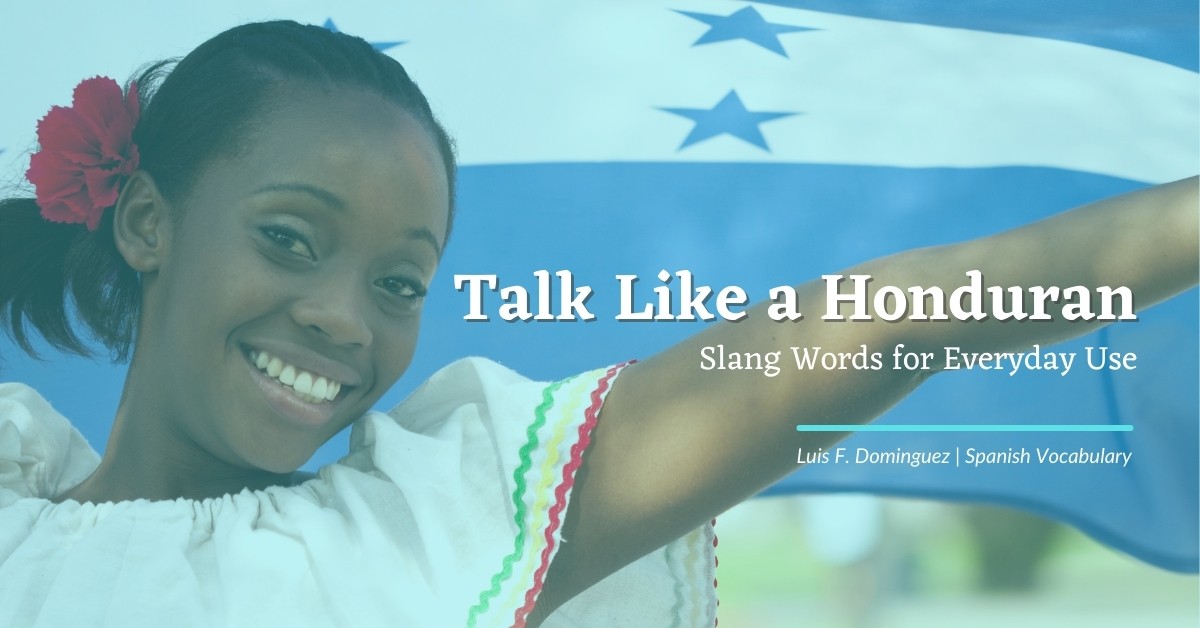
Talk Like a Honduran: Slang Words for Everyday Use
Are you planning to visit Honduras and looking to learn a bit of Honduran slang? You’ve come to the right place! Honduras is a beautiful country located in the middle of Central America. It borders Guatemala, El Salvador, and Nicaragua. While Hondurans speak Spanish, they have created their own words and unique way of speaking the language. For that reason, today I’ll explain what slang...Read More
Don’t Get it Backwards! Learn to Use ‘al revés’ in Spanish
Did you know that saying that something is al revés in Spanish can mean different things? Or that in order to communicate all the ideas that al revés conveys in Spanish, you would need to use several different words and expressions in English? Today, I’ll take you on a journey to the upside down world of the al revés expression in Spanish. I’ll discuss its different meanings, what the...Read More
Llevarse vs llevar: What’s Their Difference in Meaning?
Do you know the difference between llevarse vs llevar? Both of these Spanish verbs generally refer to the action of carrying or taking someone or something somewhere. However, by digging a little deeper, we’ll see that Spanish speakers use them in a variety of ways. Due to the overlap between the two, it’s natural for Spanish learners to confuse llevarse vs llevar. Read this...Read More