
‘Ser’ Adjectives and How to Use Them in Spanish Sentences
Learning the different forms of the verb ser, Spanish for “to be,” is one of the more challenging aspects of learning the language. In English, conjugating the verb “to be” requires memorizing all of the irregular forms of the verb; the same case applies to Spanish. Unfortunately, most of these conjugations have no shortcut or easy way to learn them (with a few exceptions). On top of that,...Read More
Top 14 Spanish Grammar Resources of 2020: Something for Everyone
Michel de Montaigne once said, “The greater part of the world’s troubles are due to questions of grammar.” Can you find the grammatical mistake he humorously made? The verb “are” should be “is!” If you didn’t catch that mistake, don’t worry. Grammar can be difficult, even in your native language, but it often becomes overwhelming when you start learning a second language like Spanish. Before...Read More
Spanish Grammar Exercises with Answers for Intermediate Learners
Who is an intermediate learner? An intermediate learner is someone who already has a large vocabulary in Spanish and knows how to communicate basic messages. The challenge for an intermediate learner now is to communicate using the correct grammar. For this reason, today you are going to put your previous knowledge into practice with these Spanish grammar exercises! ...Read More
Sentirse vs Sentarse: How to Use me siento, lo siento, and lo que siento
What’s the difference between me siento and lo siento? If you’ve ever wondered that, you’ve come to the right place for the answer! Plenty of Spanish verbs challenge our understanding and frustrate our journey to fluency, but learning to distinguish confusingly similar verbs and phrases is worth the headache! Spanish is a beautiful language with tricky intricacies that need a bit of further...Read More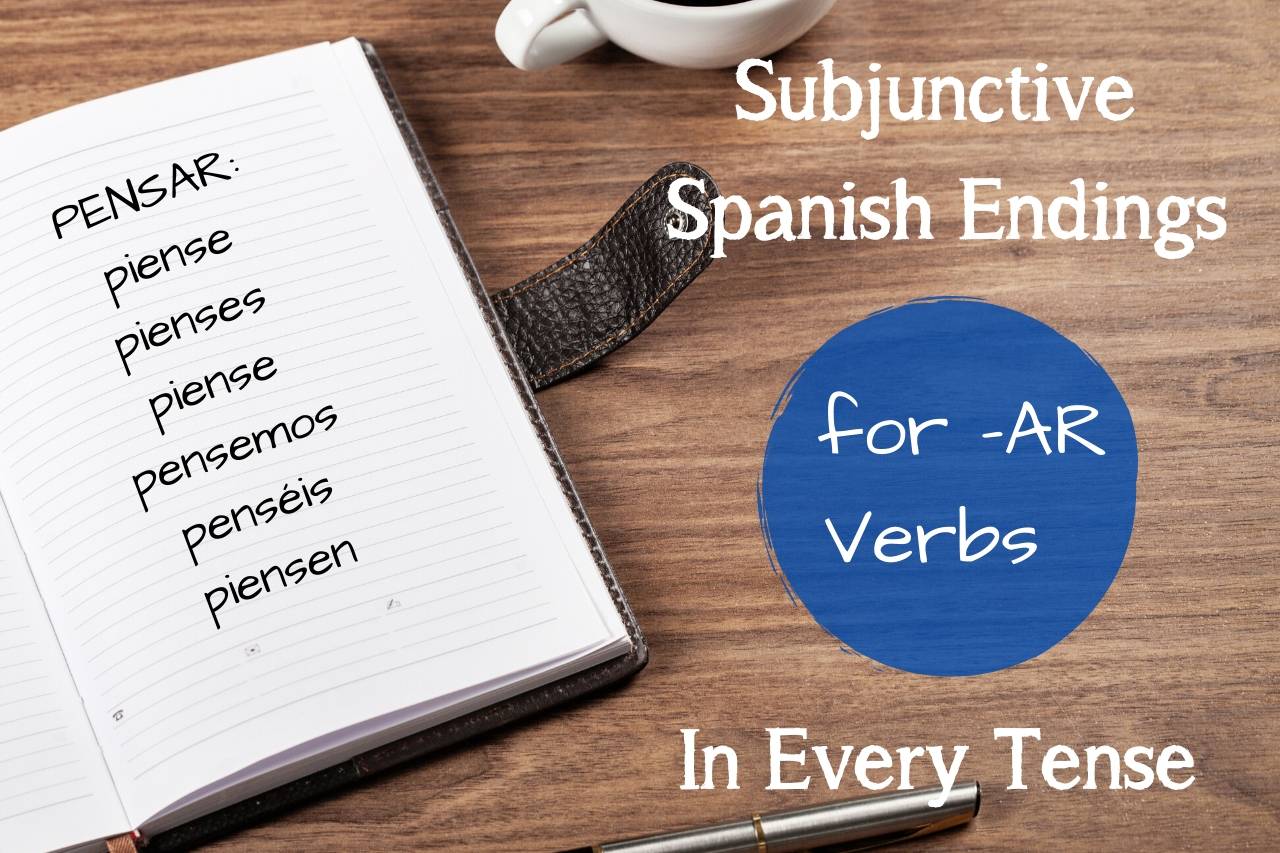
Subjunctive Spanish Endings for -AR Verbs in Every Tense
What exactly is the Spanish subjunctive and what’s the big deal about their endings? It’s a grammatical mood used when the speaker feels uncertain about the action of the sentence or is expressing a subjective opinion. In other words, it expresses the meaning of the verb as a non-reality: Si fuera contenta. (If I were content.) In this case, contentment is a wish, and...Read More
Quick Lessons on Spanish Future Tense Endings for the Fast Learner
¿Será que quieres hablar sobre el futuro en español? Are you stuck in the present with your Spanish? If you’re ready to branch out and bulk up your verb tenses to include all Spanish future tenses, you are in the right place. Sharpen your skills while learning how to spot and use future tense endings in Spanish. Four powerful verb tenses allow you to express your thoughts,...Read More
All You Ever Needed to Know About Spanish (Simple) Past Tense Verbs
What did you do last weekend? Did you study Spanish with a friend? Talking about past events is crucial to conversations—we use it to tell stories, talk about memories, and share previous events and feelings. Communicating prior events is a huge part of almost every conversation, which is why it is so important to learn this tense in your second language: Spanish. Let’s explore the Spanish...Read More
Spelling Words in Spanish with “C”
What’s the first thing that comes to mind when you hear the word “spelling?” You may relate it to spelling bees or it may take you back to practice spelling lists from elementary school. In this technological age, spelling does not seem as important because we have automatic spell checkers at our disposal, but it is! Especially when learning a foreign language. In this blog post, we will be...Read More
Estar and Ser: Funny Mistakes and How to Use the Verbs the Right Way!
How to correctly use estar and ser is the cause of countless headaches among new learners of the Spanish language. But it shouldn’t be like that, once you understand how it works, estar and ser are just like any other Spanish verb. “To Be” a Straightforward Verb The power of the verb “to be” is that it expresses who you are, how you feel, what you do for a living, and...Read More