Mastering Hard Words in Spanish
Learning a new language is a rewarding experience, but it comes with its share of challenges, especially when it comes to pronunciation.
For many Spanish learners, mastering hard words in Spanish can be particularly daunting.
Difficulties in learning Spanish hard words arise from various factors, such as differences in phonetics, unique sounds, and long words.
In this article, we will explore 20 hard words in Spanish, along with practical strategies and tips to improve your general pronunciation.
Whether you’re a beginner or an intermediate learner, this guide will help you confidently tackle those tricky words.
Join 559 million people on the planet who speak Spanish!
Sign up for your free trial Spanish class today. ➡️


Understanding Hard Words in Spanish
Hard words in Spanish are simple in meaning, but they often pose challenges due to their pronunciation or unique phonetic features.
These words might contain sounds or combinations that don’t exist in your mother tongue.
Mastering the correct pronunciation is essential to communicate effectively.
General Tips for Pronouncing Hard Words in Spanish
What might seem daunting initially will become easier if you break it into smaller steps. The same thing happens with the pronunciation of difficult words in Spanish.
If you have the correct strategy to tackle them, you will be successful in the short run and finally be able to imitate the native pronunciation at all times.
Here are some valuable tips that can help you.
1. Break it Down
Divide long words into syllables and practice saying each syllable separately before combining them.
2. Listen and Imitate
Use language learning platforms, Spanish podcasts, Spanish movies, and tv shows to listen to native speakers and imitate their pronunciation and rhythm.
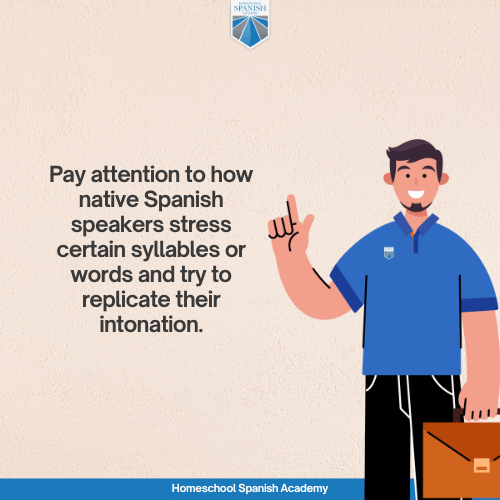
Pay attention to how native Spanish speakers stress certain syllables or words and try to replicate their intonation.
3. Practice Tongue Twisters
Tongue twisters are a fun way to improve pronunciation!
Find Spanish tongue twisters, choose your favorite ones, and challenge yourself regularly. Here are Spanish Tongue Twisters for Perfecting Your Pronunciation.
4. Master Tricky Sounds
Identify the challenging sounds for you, for example, the Spanish “R,” and focus on practicing them until you’re comfortable.
Here are some articles that will help you with this tricky letter:
5. Record Yourself
Use your smartphone to record yourself speaking.
Then listen to the audio and pay attention to the words you can improve and work on. You can send recordings to your Spanish-speaking friends and ask them for an opinion.
6. Read Aloud
Regularly read Spanish texts out loud to improve your pronunciation, rhythm, and intonation.
7. Practice Regularly
Consistency is key. Set aside daily time to practice pronunciation exercises.
There are many online resources where you can find pronunciation guides, audio samples, and other types of help. Spend some time gathering useful resources.
I highly recommend looking at the World’s Most Complete Spanish Pronunciation Guide [+Audio].
20 Hard Words in Spanish
Let us explore a list of common hard words in Spanish.
We will put some tips and strategies to help you pronounce each one accurately and confidently.
We will put all the pronunciation here in International Phonetic Alphabet.
1. Desafortunadamente (Unfortunately)
Break it down into syllables: des-a-foɾ-tu-na-da-men-te. Pay attention to the “da” and “men” syllables, as they might be challenging.
Practice saying each syllable slowly and then combine them gradually for a smooth flow.
2. Dificultad (Difficulty)
Pronounce it as di-fi-kul-tad.
Be mindful of the “fi” sound, as it might differ from what you’re used to in English. Make sure you stress the last syllable.
The final “d” should be pronounced softly. Some natives may not pronounce it at all.
3. Murciélago (Bat)
The pronunciation is muɾ-sje-la-ɣo. Focus on the “sje” and “la” syllables, which contain unique sounds.
Remember that the “sye” syllable will be pronounced differently in Spain and Latin America. Read What’s the Spanish Lisp? All About the Ceceo to learn more.
4. Desarrollador (Developer)
Say it as des-a-ro-ʝa-ðoɾ.
Remember that the letter “ll” in Spanish, in most cases, will be pronounced as “y” in the English word “yes,” but in some parts of America, it is pronounced as “zh” sound, like in English “pleasure.”
Also, the double “rr” sound will require your special attention. Check out the Collins dictionary guide for helpful images and exercises to make your “rr” perfect.
5. Compañerismo (Companionship)
Pronounce it as kom-pa-ɲe-ɾis-mo.
Pay attention to the letter ñ, which does not exist in English. Try to pronounce this syllable softly as “nyeh.”
6. Satisfactoriamente (Successfully)
Break it down:sa-tis-fak-to-ɾja-men-te. Take your time with each syllable, and make sure to stress the “to” one.
7. Esencialmente (Essentially)
Say it as e-sen-sjal-men-te.
Once again, depending on the Spanish accent you’re trying to imitate, the “sjal” syllable may sound different.
This word looks complex, but it should sound easier when you break it down into syllables.
8. Estadísticas (Statistics)
Say it as es-ta-ðis-ti-kas.
Emphasize the “dis” syllable- The “ti” syllable has a soft “t” sound similar to “tea” in English.
9. Anfibio (Amphibian)
Pronounce it as aɱ-fi-βjo.
Pay attention to the “fi” sound, pronounced like “fee” in English. The “b” is pronounced as a soft “b.” Stress the syllable “fi.”
10. Independientemente (Independently)
Take it slow and break it into syllables: in-de-pen-djen-te-men-te. Emphasize the stressed syllable “djen.”
Remember that the letter “e” in Spanish is pronounced like “e” in “Pen,” and “i” is pronounced like “ee” in “see.” Avoid confusing these two.
11.Imprescindible (Essential)
Once again, break it into syllables and practice: im-pre-sin-di-βle.
The “im” syllable has a soft “i” sound, similar to “im” in “impossible.” The “pre” syllable should be pronounced clearly. Stress the “di” syllable.
12. Incomprensible (Incomprehensible)
Practice each syllable separately: iŋ-kom-pɾen-si-βle.
Pay attention to the first “i” and pronounce it as short “i” again, like in “Impossible.” The “pre” should be pronounced as in “prey” in English.
Finally, emphasize the “si” syllable and pronounce it like the English word “see.”
13. Cuadernillo (Workbook)
Say it as kwa-ðeɾ-ni-ʝo.
Pay attention to the letter “d” as its pronunciation is more softly than in English. Sometimes it may even sound like the “th” English letter combination.
The syllable “ni” should be pronounced as “nee” in English, and now you should already know how to pronounce the “ll” letter combination.
14. Electrodoméstico (Home Appliance)
Break it down to practice easily: e-lek-tɾo-ðo-mes-ti-ko.
Avoid pronouncing the “o” as diphthongs, like in “go,” and use the English word “got” as an example. Stress the “mes” syllable.
15. Extraordinariamente (Extraordinarily)
Take it slow and pronounce each syllable separately: eks-tɾa-oɾ-ði-na-ɾja-men-te. Stress the “na” syllable.
The letter “x” here should be pronounced as “ks,” like in “extra,” so this one should be easy for you. Emphasize “na,” which has a soft “n” followed by a short “a” sound, similar to “na” in “banana.”
The “ria” syllable can be pronounced as “ree-a.”
16. Preocupante (Worrying)
Say it as pɾe-o-ku-pan-te.
The “pre” syllable has a soft “e” sound, similar to “pre” in “Preference.” Emphasize the “pan” syllable and pronounce the final “te” like in “tender.”
17. Sobreviviente (Survivor)
Try saying it syllable by syllable: so-βɾe-βi-βjen-te.
Do you know that the Spanish letters “b” and “v” sound alike? You could pronounce them all here as “b” – so-bre-bi-bjen-te. Remember to keep the first “o” short, like in “got.”
18. Excepcionalmente (Exceptionally)
Break it down: ek-sep-sjo-nal-men-te.
Pronounce the first syllable, like in “expert.” Stress the “nal” syllable and keep the “o” short.
19. Comprensible (Understandable)
Say it loud slowly: kom-pɾen-si-βle. The difficulty here lies in the 2nd and last syllables.
Pronounce the “r” strongly. The syllable “pren” sounds a bit similar to the English word “prance,” but the vowel “e” should sound like in the word “hen.”
20. Felicidad (Happiness)
Pronounce the word syllable by syllable: fe-li-si-ðað.
The first syllable, “fe,” sounds like the one in the English word “festival.” Remember to stress the final “dad” and pronounce the last “d” softly.
Bonus: What’s the Longest Word in Spanish?
Long words in any language always seem intimidating to pronounce.
In Spanish, there’s a word that stands out as one of the longest and most challenging to master: esternocleidooccipitomastoideos.
This word consists of 31 letters.
It’s the plural form of esternocleidooccipitomastoideo, which refers simply to the sternocleidomastoid muscle in the human neck located on both sides.
The word is derived from both Latin and Greek roots. Let’s break it down:
- “Esterno” refers to the sternum (breastbone).
- “Cleido” refers to the clavicle (collarbone).
- “Occipito” refers to the occipital bone at the base of the skull.
- “Mastoid” refers to the mastoid process, another bone behind the human ears.
Now that you know the meaning, it’s easier to break it down. The whole word is pronounced as es-teɾ-no-kleij-ðo-ok-θi-pi-to-mas-toij-ðe-os.
You can listen to its pronunciation both by Spanish and Latin American speakers at Forvo.com. The easiest version of this word shortens it to “esternocleidomastoideo”.
If you want to improve your pronunciation and eliminate some mistakes, check out: 7 Easy-to-Fix Pronunciation Mistakes Spanish Learners Make.
Or, if you want other tips to sound fluent, read: 52 Spanish Connecting Words to Sound Like a Native.
Feeling more confident about the Pronunciation of Spanish Hard Words?
Mastering pronunciation is a significant step in becoming a confident and effective Spanish speaker.
Consistent practice and exposure to native speakers are essential, whether tackling long words like “esternocleidooccipitomastoideos” or dealing with common hard words.
If you are ready to take your pronunciation to the next level but have no native speakers around you, sign up for a free trial class at Homeschool Spanish Academy today.
Our experienced native Spanish teachers will guide you through the intricacies of the Spanish language, helping you gain confidence in your speaking abilities.
We can’t wait for you to join us!
Join one of the 40,000 classes that we teach each month and you can experience results like these

“This is the best way for your kid to learn Spanish. It’s one-on-one, taught by native Spanish speakers, and uses a curriculum.”
– Sharon K, Parent of 3

“It’s a great way to learn Spanish, from native Spanish speakers in a 1-on-1 environment. It’s been fairly easy to schedule classes around my daughter’s other classes. The best value for us has been ordering multiple classes at a time. All the instructors have been great!”
– Cindy D, Parent of 3

“HSA offers very affordable, quality, one on one classes with a native speaker. My son has greatly benefited from taking classes. We have seen his confidence increase as well as his pronunciation improve because he learns from a native Spanish speaker. HSA has quick, personal customer service. Our family has been very pleased with our experience so far!”
– Erica P. Parent of 1
Want more free Spanish lessons, fun content, and easy learning strategies? Check these out!
- Why So Many Latin American Desserts Are Served Warm (and Why Kids Love That)
- Why Some Latin American Desserts Are Less Sweet, and What That Teaches Kids About Taste
- From Games to Grammar: How Educational Technology Can Teach Structure Without Boring Kids
- Why Kids Learn Pronunciation Better Through Live Video Than Through Apps or Videos
- Screen Time vs. Learning Time: How to Tell If Technology Is Helping or Hurting Your Child’s Spanish
- Spicy Food Traditions Across Latin America (And How Families Talk About Them)
- Why Spicy Food Is a Family Language in Latin America, And What Kids Learn From It
- What Valentine’s Day Teaches Advanced Learners About Sounding Natural in Spanish

- 10 Ways Learning Spanish Can Improve Your Child’s Behavior - June 21, 2025
- Equipping Your Child for Fluency: 8 Tips for Teaching Spanish - June 14, 2025
- Llegar vs Llevar in Spanish: What’s the Difference? - June 12, 2025